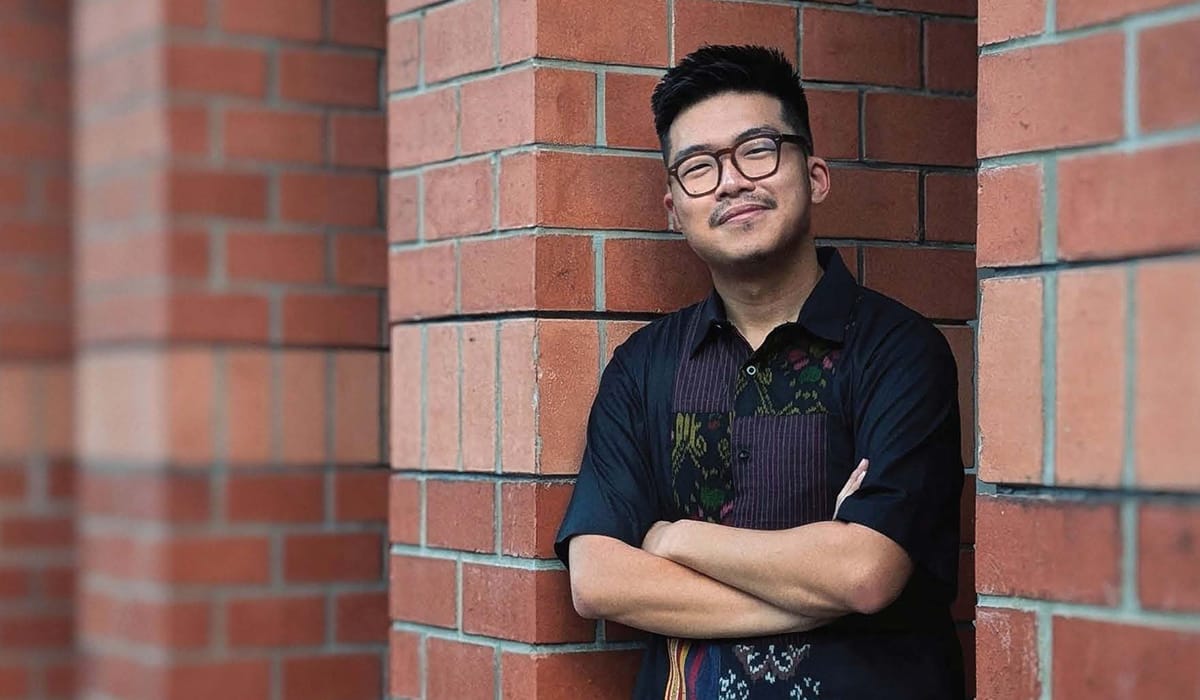
Gerald Sim Kuan Soong is an Assistant Manager (Built Heritage & Archaeology) at the National Heritage Board. He is a recipient of the NHB Scholarship and holds a Bachelor of Arts in Archaeology and Anthropology.
Like pieces of a puzzle, the past and present are interwoven, revealing hidden connections and untold stories. These stories come to life through the dedicated work of archaeologists who uncover fragments of history buried beneath our feet.
Gerald Sim Kuan Soong, a National Heritage Board (NHB) scholar, embodies this passion for all things heritage and archaeology. As Assistant Manager of Built Heritage & Archaeology at NHB, Gerald is part of a team that leads archaeological management efforts aimed at preserving Singapore’s rich history and making it accessible to the public. Through his work, Singapore’s past comes alive, unravelling the stories that have shaped it into the vibrant city we know today.
Gerald shares insights into his journey in archaeology and his fulfilling work to showcase Singapore’s rich heritage.
What ignited your passion for archaeology?
My interest in archaeology stemmed from a broader fascination with culture. My first encounters with the field came from visits to the National Museum of Singapore and the National Museum of Indonesia in Jakarta. I realised how important archaeological artefacts are in telling stories of where we come from. They connect us to people from the past across space and time in an immediate way that written history often cannot do. While there weren’t specific events or individuals that led me to my career, there were specific objects that had a profound impact. For example, the “Headless Horseman” figurine at the National Museum of Singapore, discovered along the banks of the Singapore River and dating back to the 14th century, exudes a mystery that fascinates me and makes archaeology an alluring field to me.
That’s fascinating! What made you decide on the NHB Scholarship?
I knew that NHB manages many of our museums across Singapore and is the foremost authority in safeguarding and advocating for heritage in the country. I wanted to work in an environment that would allow me to apply what I learnt in my undergraduate studies directly to my work. Working in the Public Service also allows me to contribute meaningfully to heritage and archaeology on a national scale. These reasons made the NHB Scholarship perfect for me.
What is one project you’ve enjoyed working on?
I had the pleasure of documenting a kelong in Singapore, a project that aligned with my interest in the country’s maritime heritage. A kelong is an offshore fish-trapping structure that was found throughout Singapore’s coastal areas.
This project made me realise the importance of documenting the tangible things that define us as an “island nation”. We collaborated with the Organisational Design and Innovation (ODI) department, which employs cutting-edge 3D and digital heritage work for documentation. I applied the ethnographic skills I acquired from my anthropology education, such as oral history interviews, sketching, and mapping.
When we presented the results to the owners, they were very touched. One of them, who had difficulty accessing the kelong due to physical limitations, was particularly moved by the 3D model, as it allowed them to “be” on it virtually. It’s easy to separate the professional and emotional aspects of work, but at the end of the day, much of what we do is centred around that human aspect of heritage.
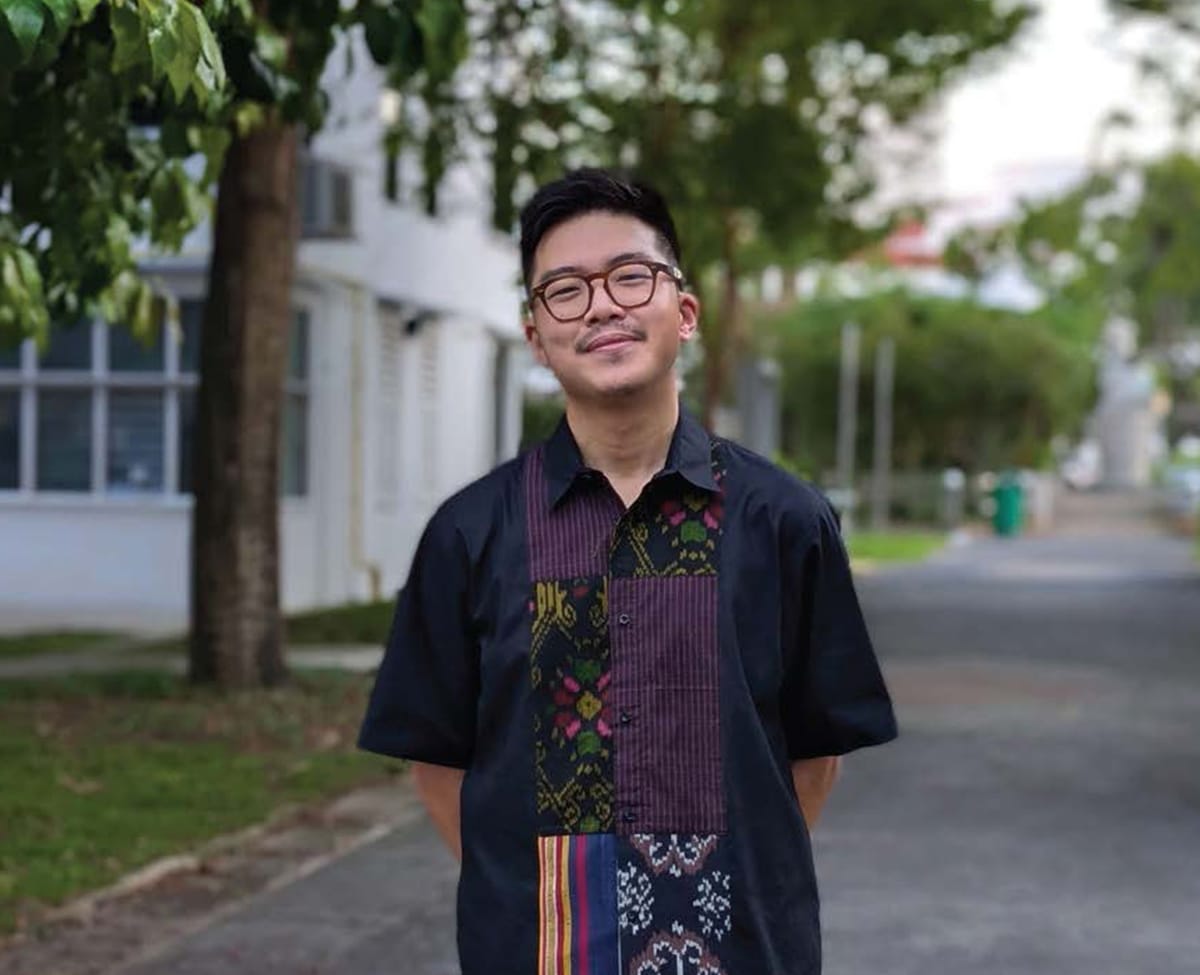
Gerald Sim Kuan Soong
That must have felt incredibly satisfying! Speaking of meaningful work, what would you say is the most rewarding aspect of your job?
A fulfilling part of my work is broadening public awareness of and access to Singapore’s rich archaeological heritage through policy frameworks. Although much of what we know about Singapore before 1819 is based on archaeological material, not many people know what archaeology is. My relatives never fail to ask me this every Chinese New Year: “What does an archaeologist actually do?”
Even for those familiar with the field, archaeology can seem highly specialised, technical, and perhaps even dull. Part of my work aims to demystify this profession, demonstrating that while it requires expertise, it’s also an accessible and important way to understand our past and origins. To achieve this, we encourage museums and other institutions to exhibit archaeological findings and promote research on these materials. We are developing a framework to facilitate this display and study of archaeological artefacts, make the field more approachable to the public, and enabling researchers to uncover more about our past.
How has NHB supported your professional development?
We are encouraged to learn from other divisions that focus on different aspects of heritage—for instance, I learnt a lot from the ODI department. Additionally, I was exposed to the important and intricate conservation work practiced by our colleagues at the Heritage Conservation Centre—this is particularly relevant to my role, as their efforts ensure our archaeological finds remain intact.
Being part of NHB also connects me with the wider community of practice in archaeology and heritage across Singapore. I’ve gained many contacts and lifelong friends who share the same passions, both within and outside the organisation.
Describe the work culture at NHB in three words.
Passionate, ambitious, and critical.
“Passionate” is a codeword for nerdy! We come from a variety of backgrounds but share a common obsession for what we do. For example, I have a colleague who can name all the dynasties of China along with the reigns of each emperor!
“Ambitious” captures our drive to explore the broad scope of heritage, from Ayurvedic medicine to National Monuments. NHB always comes up with bold and innovative solutions to address key challenges in the sector.
“Critical” because we are always encouraged to reflect on our work, allowing us to refine it early before implementation.
What can aspiring scholars do to prepare for a career with NHB?
Reach out early. Attend talks, lectures and conferences that interest you, and don’t be afraid to ask questions and talk to people. I highly recommend pursuing internships with NHB or adjacent institutions, such as the National Gallery and Singapore Art Museum. These are often project-driven internships, giving you the opportunity to work on meaningful projects.