Bryan Chua Wei Jin is a Manager at the Defence Policy Office in the Ministry of Defence. He is a recipient of the Defence Merit Scholarship and holds a Bachelor of Science in Sociology from the London School of Economics and Political Science.
In an era marked by a volatile geopolitical climate, strategic planning is more critical than ever for national security. As a Manager at the Defence Policy Office in the Ministry of Defence (MINDEF), Bryan Chua Wei Jin plays a pivotal role in shaping Singapore's defence strategy. By analysing global developments and understanding regional dynamics, Bryan translates these critical insights into actionable strategies. His work is essential to ensuring that Singapore’s defence remains robust in the face of an ever-changing global landscape.
Reflecting on his experiences, Bryan shares how his experiences at MINDEF have not only shaped his professional path but also strengthened his commitment to safeguarding the nation through forward-thinking strategies.
What drew you to pursue a career in MINDEF?
The idea of working in the public service has always felt like a natural fit as it allows me to contribute to something greater and inspires me to give my best. My time in National Service (NS) led me to think that a career with MINDEF would be varied, complex, and interesting. While it may sound cliché, it was during NS that I got a real taste of the challenges involved in areas like deployment, resource management, and fostering greater commitment to National Service. Though my career has unfolded in ways I hadn’t initially expected, those early experiences left me with a deep sense of purpose, inspiring me to pursue a career at MINDEF.
How has the Defence Merit Scholarship supported your professional growth?
Beyond the financial support, there were regular annual engagements with MINDEF leadership, which helped us stay connected with the organisation. During my studies, I also took up two internship opportunities—one with Nexus, where I worked on museum development research on national education, and another with the National Service Policy Department (NSPD). At NSPD, I contributed to enhancing approaches to engaging and recognising national servicemen, with a particular focus on improving commitment to service among enlistees who have fewer connections to Singapore.
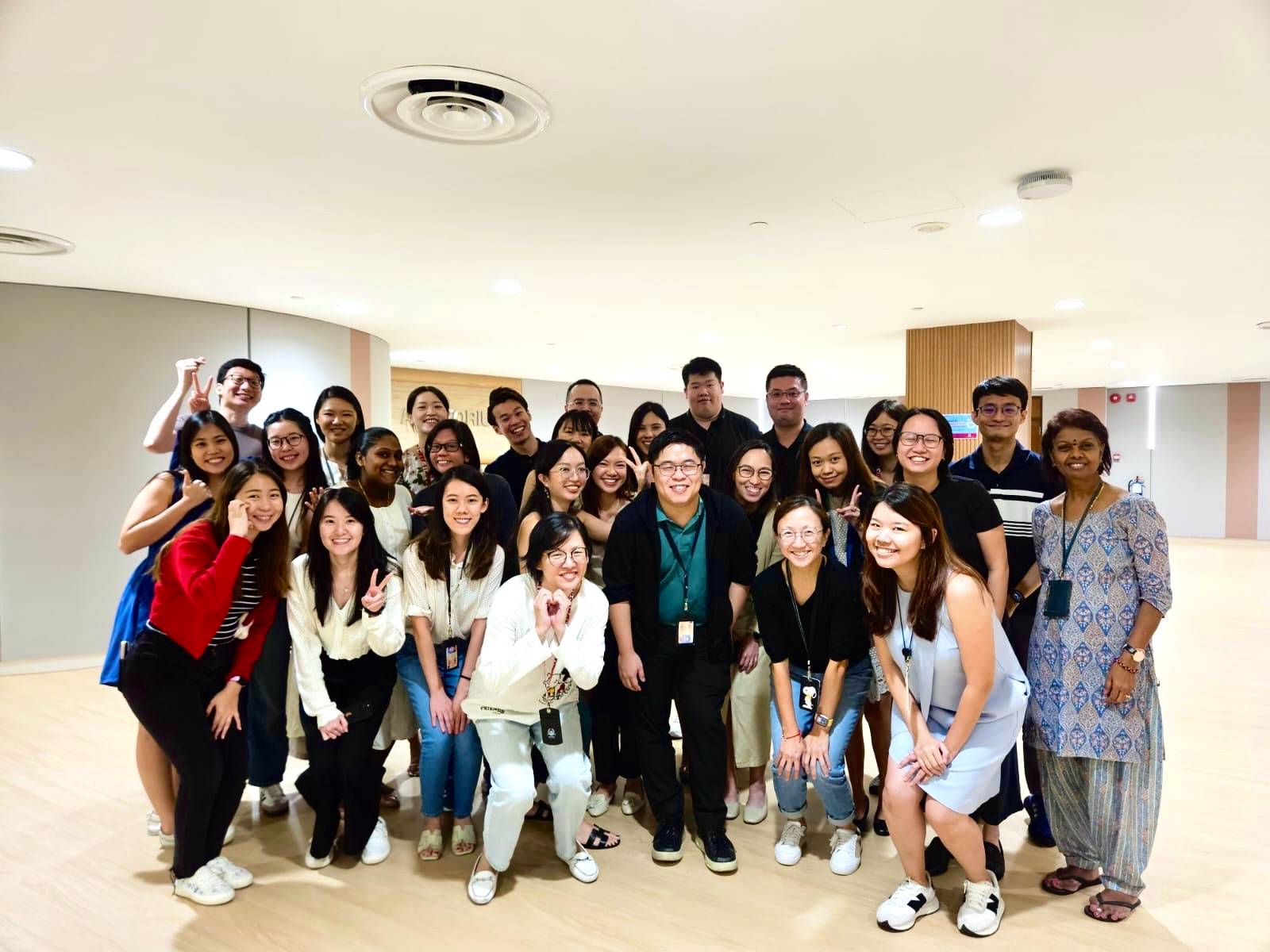
Bryan with his team at NSPD
Could you tell us more about your current roles and responsibilities?
I’m currently a Manager at the Strategic Futures Branch in the Defence Policy Office. My role involves understanding, examining, and assessing geopolitical developments relating to defence and security—both in our region and globally. I then evaluate how these developments affect our defence priorities and strategies in the near-term.
What’s the most memorable moment you’ve experienced on the job so far?
The most memorable moment for me was supporting the passage of amendments to the Enlistment Act in February 2024. This involved reviewing iterations of the legislation with colleagues from the Attorney-General’s Chambers (AGC) and MINDEF Legal Services, as well as preparing the various speeches for delivery in Parliament. Given that the last amendment to this Act was in 2006, it truly felt like a once-in-a-lifetime experience. Being in Parliament House, watching the proceedings unfold, and supporting Senior Minister of State for Defence Mr Heng Chee How made it even more special.
What avenues for exposure and professional development has MINDEF provided you?
Throughout my time in both NSPD and DPO, I’ve been able to expand my knowledge and work on projects that broadened my horizons. In terms of defence relations, I’ve participated in engagements with experts on geopolitical issues alongside foreign counterparts, as well as worked on projects that exposed me to other areas of MINDEF, such as resource management, technology development, and national education.
While working on NS policy, I’ve also had the chance to work with legal colleagues from both within MINDEF and the AGC, which has deepened my understanding of the legislation supporting our NS system and how enforcement operations and the legal framework function.
I’ve also gained significant exposure to data analytics, an area that was initially unfamiliar to me. Through working on projects that involve developing our data analytics capabilities and charting long-term strategies, I’ve learned a lot about collaboration, project and product management, and the entire language of data and digitalisation. One highlight was attending a Data and Analytics Conference earlier this year with other MINDEF colleagues, which was an eye-opening experience.
What’s something intriguing about working at MINDEF that might surprise most people?
People might expect MINDEF to be a very hierarchical and authoritative environment, but it’s not. I’ve been fortunate to meet many lovely people across all levels of seniority, who have generously shared their time and advice with me. The culture here is collaborative, and we work together to get the job done.
What are your long-term goals within MINDEF?
I’d like to learn as much as possible about the different parts of the organisation and its work to understand where I can best contribute, both to MINDEF and the wider public service. As I progress in the organisation, I also hope to help foster the same positive, transformative environments that I have been fortunate to work in so far.
What opportunities does MINDEF offer for interested scholars?
There are plenty of opportunities—my own experiences reflect the truly varied nature of work here. You’ll have many chances to interact with senior leadership who welcome you to share your views and encourage you to express interest in areas you’d like to explore. There’s ample room for exposure, whether it’s learning from colleagues within MINDEF, engaging with counterparts from other government agencies, or even connecting with the private sector through conferences, engagements, and overseas visits.
Above all, because of how multi-faceted MINDEF is, there are endless opportunities to learn wherever you are within the organisation.