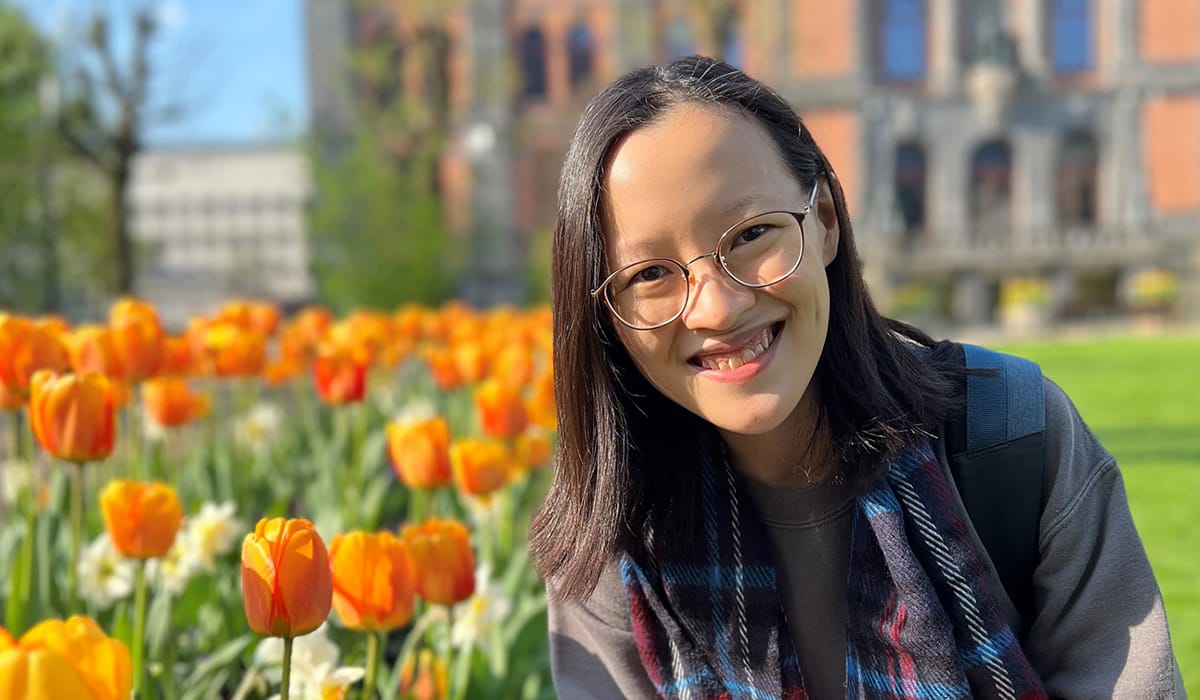
Lim Ci Hui is an Academy Officer at the Professional Development Planning Office at the Ministry of Education. She is a recipient of the Education Merit Scholarship and holds a Bachelor of Arts and a Master of Philosophy in Education from the University of Cambridge in the United Kingdom. She also holds a Postgraduate Diploma in Education from Nanyang Technological University – National Institute of Education.
Teaching extends far beyond the walls of the classroom—it’s about sparking change and inspiring minds. For Lim Ci Hui, what began as a passion for teaching music has evolved into a mission that goes beyond just teaching. Now, as an Academy Officer at the Ministry of Education’s (MOE) Professional Development Planning Office, she shapes learning experiences that equip educators with the tools and knowledge they need to inspire and transform young lives. Though her role is behind the scenes, the impact she’s making is felt in every classroom, every lesson, and every student’s future.
We caught up with Ci Hui to uncover the driving force behind her passion and how she’s helping to shape the next generation of learners.
How did you get interested in your field of work?
As a student, I had inspiring Music teachers who taught me not just about music but also about diverse cultures around the world, history, the arts and aesthetics. They gave my classmates and I the skills and opportunities to develop and express our creativity. These teachers inspired me to pursue a career in teaching.
What motivated you to apply for the Teaching Scholarship?
I applied for the Teaching Scholarship as I felt that education was a meaningful area of work. From my own experiences, as well as those around me, I saw how good teachers were able to develop curiosity and instil positive beliefs about what they were capable of. While it may be somewhat idealistic, I am driven by the idea that through teaching, I can contribute to a kinder and better world.
How have scholarships helped you build purpose, take charge, and grow your skills?
As a teaching scholar, I am privileged to be exposed to a diverse range of opportunities that have provided me with a broader and deeper understanding of MOE as an organisation, and its decision-making process regarding education policy. This helped me to deepen my impact as a teacher.
For instance, I had the opportunity to intern at the Education and Career Guidance (ECG) Branch, under the Student Development Curriculum Division, during my university break. At that point, ECG was an emerging area, and I had the unique chance to work alongside colleagues who were designing and implementing foundational support structures that are now staples in schools, such as the ECG curriculum, counsellors and portal.
Can you tell us more about your work at the Professional Development Planning Office?
Currently, I am an officer at the Academy of Singapore Teachers (AST), which champions and provides support for the professional learning and growth of teachers in Singapore.
My unit spearheads efforts to promote coherent and forward- looking professional learning experiences in MOE. We carry out scans and reviews to ensure that MOE’s professional learning provisions for teachers are impactful and forward-looking. My colleagues and I gather and analyse data from different sources, including international studies, local research and internal data, to identify trends in how teachers are learning, whether our professional learning provisions have been effective, and possible innovations to further shape professional learning. These findings have implications on how MOE should design learning experiences for teachers to help them learn effectively and build their capabilities and confidence.
My unit also supports schools in designing school-based professional learning effectively for their staff. We do this by designing easy-to-use and succinct resources that share best practices in designing professional learning. We also conduct workshops and networking sessions for School Staff Developers (SSDs), who are senior officers in each school who oversee the professional learning of their school staff.
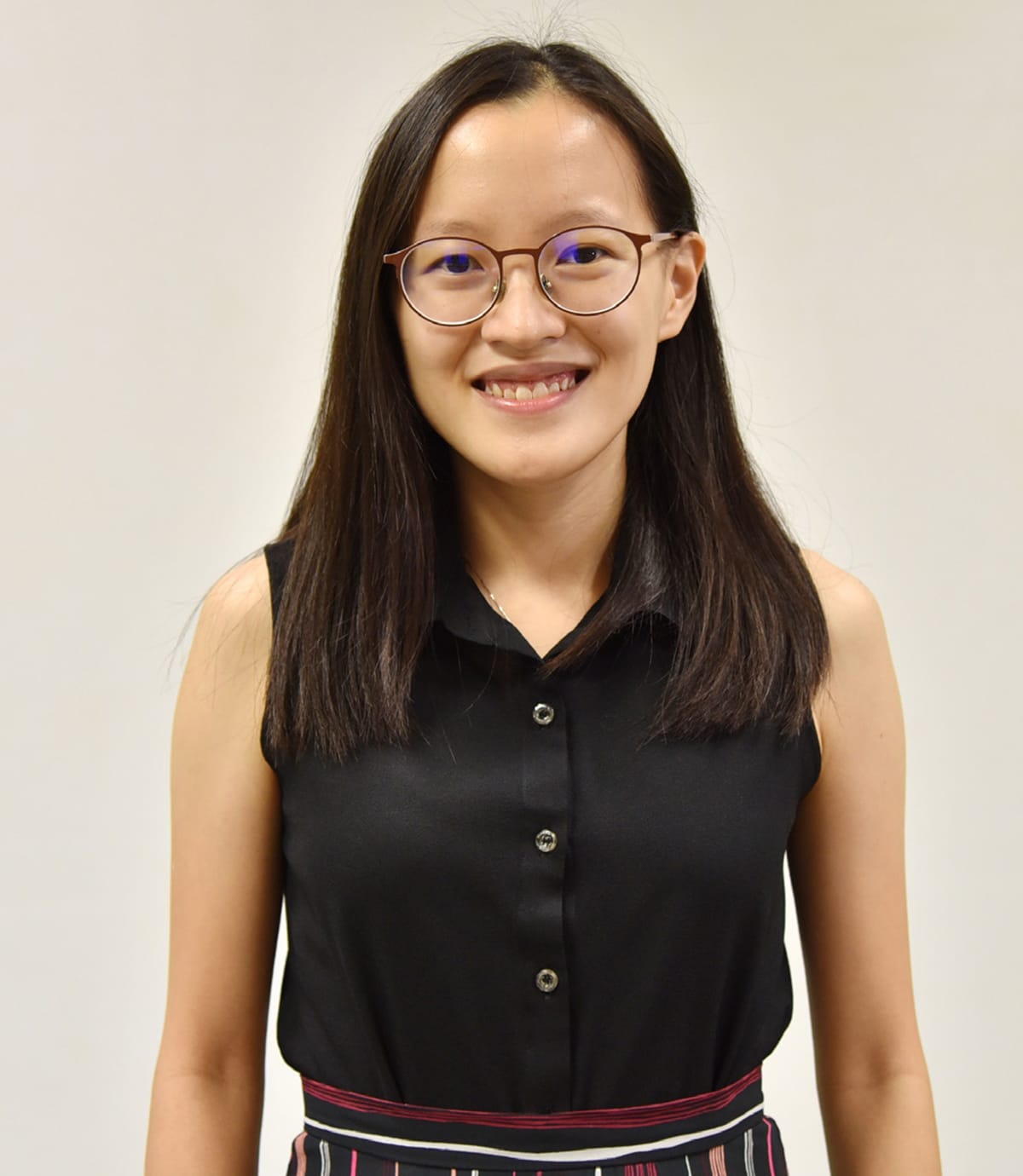
Lim Ci Hui
Can you share a time when you felt you truly made an impact?
As a Music teacher at Pasir Ris Crest Secondary School, I was part of a two-person team running three different music programmes: Lower Secondary General Music and NT Music and O-level Music at Upper Secondary. Additionally, we were heavily involved the school’s Learn for Life Programme (LLP) in Music and the Performing Arts.
I enjoyed being part of a small, close-knit team, as I had a high degree of autonomy to plan and design the school’s music curriculum and programmes, even as a Beginning Teacher. My colleague and I constantly experimented with different approaches to run our programmes, such as integrating music- making elements into Lower Secondary class routines and Upper Secondary theory lessons, organising a combined music camp with another school, and exploring creative formats for school performances during the Covid-19 pandemic.
As the school highly valued music, the programmes we developed became an important part of students’ holistic schooling experience, providing them with opportunities to apply the skills they learnt beyond the classroom.
What aspect of teaching do you find most transformative?
For me, the magic of teaching happens when students can creatively and meaningfully apply what they’ve learnt. How this looks varies across the competencies that are being taught. For instance, it could happen during a guitar lesson when students use basic chords and strumming patterns to create original arrangement for a group performance. It could also happen when a theoretical concept is applied in a new context, enriching their understanding. Helping students realise they can do something new and meaningful with their learning brings me the greatest joy.
How have you adapted your teaching skills to your work at HQ, and how have both roles helped you grow professionally?
Teaching and HQ work require different skillsets, but both require clarity of thought and the ability to communicate complex and abstract principles in a simple and clear way. In teaching, I identify what I want students to learn, assess their current level of competencies, and design learning activities to bridge that gap. At HQ, I design strategies to enhance organisational performance, which involves larger-scale complex challenges and multiple stakeholders. These are skills that I am gradually developing over time.
Finally, what advice would you give to aspiring teachers who are considering a career with MOE?
I would encourage aspiring teachers to bring their authentic selves, along with an open mind and an open heart.