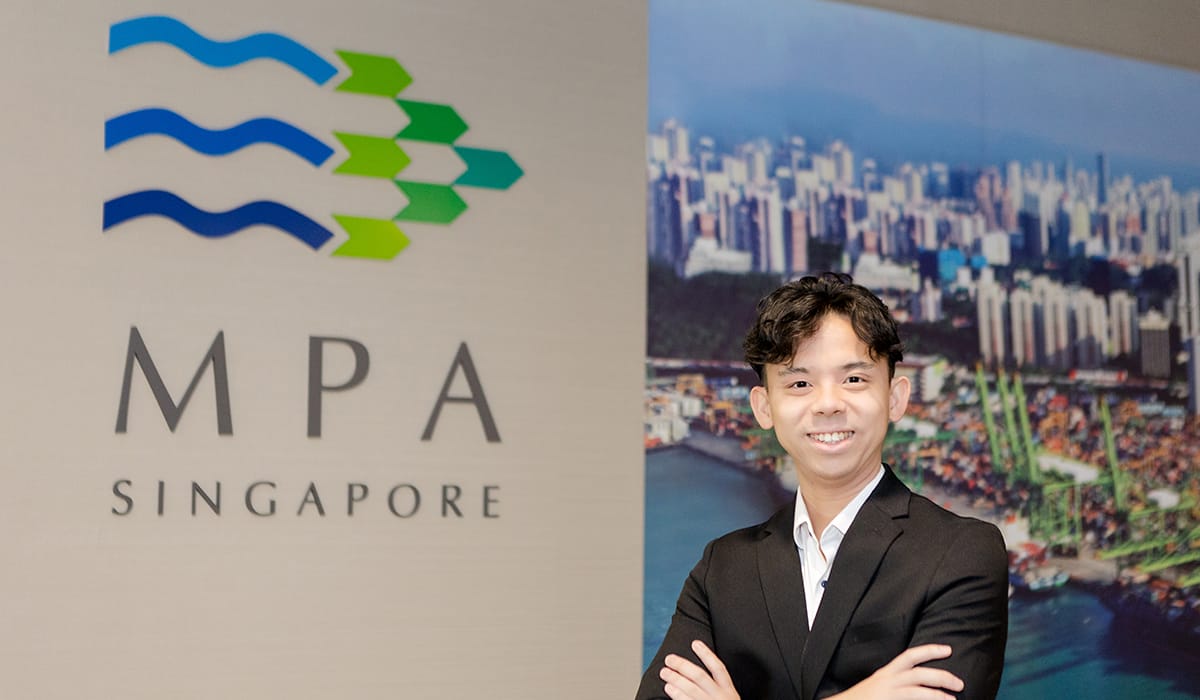
Ryan Teo Zhi Kai is Assistant Manager (International Maritime Centre Promotion-Japan and Korea) at the Maritime and Port Authority of Singapore and a recipient of the MPA Overseas Scholarship (UK and US). He graduated with a Bachelor of Science in Politics and Economics from the London School of Economics and Political Science and a Master of Science (Quantitative Economics) from New York University.
Building strong and meaningful relationships can be challenging, but for Ryan Teo Zhi Kai, it comes naturally. As Assistant Manager (International Maritime Centre Promotion-Japan and Korea) at the Maritime and Port Authority of Singapore (MPA), he transforms each client interaction into an opportunity for connection, cultivating impactful relationships with a diverse clientele.
What sets him apart is his ability to engage authentically with clients. By genuinely listening and tailoring his approach to their unique needs, he fosters trust and rapport, turning transactions into lasting partnerships.
We spoke to Ryan to learn more about his work and enriching experiences at MPA.
What sparked your interest in maritime?
Back in school, I remember being fascinated by Singapore’s history as a hub for entrepot trade and its strategic location at the convergence of key shipping routes. The maritime sector’s importance to the Singapore economy inspired me to want to contribute to uplifting the already diverse and vibrant maritime ecosystem in Singapore.
That’s impressive! How did you decide to apply for a scholarship with MPA?
The MPA Scholarship stood out because it was aligned with my academic interests in Politics and Economics and career goals. As geopolitical events and market movements exert significant impacts on maritime trade, a strong understanding of both political and economic concepts is crucial for me to excel in the maritime industry.
How has the scholarship supported your personal and professional development?
The MPA Scholarship provided me with the opportunity to pursue both undergraduate and postgraduate studies abroad, which broadened my horizons significantly. Interacting with people from diverse backgrounds and visiting over 30 countries during my university years gave me invaluable experiences and memories that I will cherish for a lifetime.
I completed two internships at the International Maritime Centre Services Division and the Finance, Procurement, and Administration Division during my scholarship period. These experiences enabled me to lead and conduct research on important topics such as Green Financing and Carbon Accounting, allowing me to make meaningful contributions to the organisation.
Can you tell us more about your role within MPA?
As an account manager for more than 20 Japanese and Korean shipping companies and their local branches, my role revolves around facilitating their business operations in Singapore. I also encourage their participation in MPA’s exciting decarbonisation and digitalisation initiatives, such as the newly launched Maritime Energy Training Facility and Maritime Cyber Assurance and Operations Centre.
I find true purpose in knowing that my efforts, when consistently added up, can have a substantial impact on the vibrancy of Singapore’s maritime industry and the economy. When companies’ needs are addressed promptly and when their concerns are heard, they will be more likely to set-up or expand existing operations in Singapore. A growing maritime cluster in Singapore translates to increased employment opportunities and local business spending.
Tell us about some exciting projects you’ve enjoyed working on?
I’ve enjoyed working on a variety of projects across the domains of decarbonisation, digitalisation, and manpower development. For instance, I formulated a customised plan to support one of my accounts with Employment Pass applications. I also introduced clients to MPA’s wind propulsion programme and the Green and Digital Shipping Corridors. Additionally, I implemented my first Maritime Sector Tax Incentive for a new shipping account. These projects helped me deepen my understanding of MPA’s core offerings and gave me the opportunity to collaborate with different departments, allowing me to connect with many new colleagues!
The International Maritime Organization’s (IMO) ambitious target of achieving net-zero greenhouse gas emissions by 2050 also presents both challenges and opportunities for MPA. In light of ongoing decarbonisation efforts within the industry, I am motivated to be part of this transformation to shape a sustainable future for maritime trade.
As you spend a lot of time building strong relationships with clients, how do you keep them engaged and involved in MPA’s initiatives?
Listening to clients’ specific needs is the most important factor in engaging clients effectively and integrating them into MPA’s initiatives. I focus on how our programmes can fill gaps in their operations and present tailored solutions. Emphasising that sustainable collaboration requires a two-way partnership, I encourage open dialogue to identify mutual benefits.
For example, when clients seek assistance with Employment Pass support for international secondees or when hiring foreign talent, I tailor manpower support or guide them through the Ministry of Manpower’s (MOM) new Complementarity Assessment Framework (COMPASS). In return, I encourage them to onboard MPA’s manpower initiatives, such as sponsoring scholarships or training locals with non-seafaring experience to take on seafaring roles such as Marine Superintendents. This makes clients feel heard and valued, making them more receptive to MPA’s initiatives.
What would you consider to be your most significant career achievement so far?
My most significant career achievement to date was overseeing and organising the MPA-Nippon Yusen Kaisha (NYK) Memorandum of Understanding Signing Ceremony in early July. Despite being only a month into my role, my superiors entrusted me with planning the event logistics for a seamless ceremonial experience. This involved customising MPA’s Corporate Slide Deck for the presentation, preparing an administrative brief, and coordinating extensively with the Japanese counterparts to ensure everyone was on the same page on the event details. Additionally, I had the privilege of emceeing the event, which allowed me to engage with attendees and keep the event flowing smoothly. The successful conclusion of this event filled me with pride.
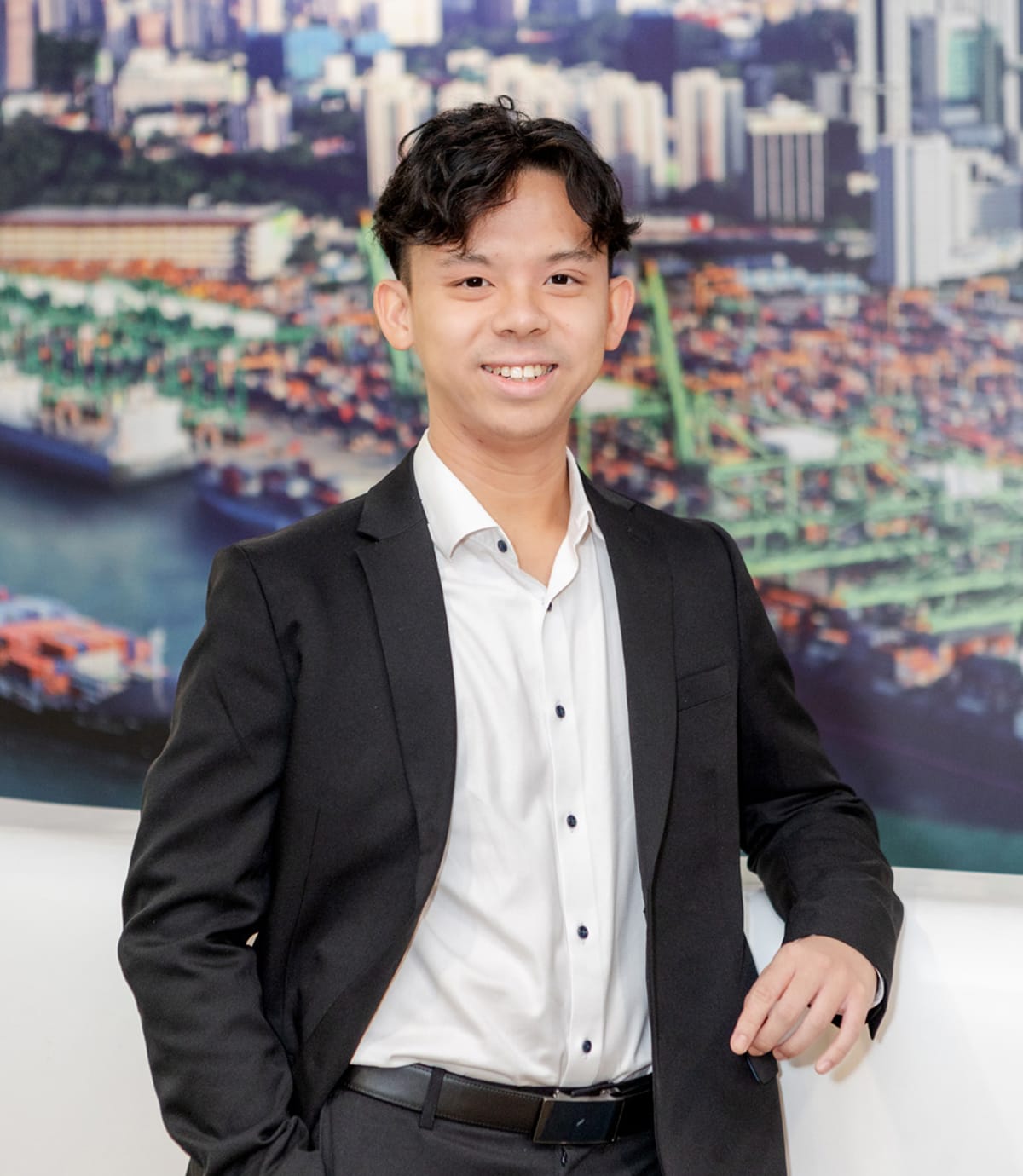
Ryan Teo Zhi Kai
That’s amazing! Finally, what opportunities are available for those considering a career at MPA?
At MPA, there are opportunities for both self-development and career advancement. Employees can participate in external upgrading courses such as language learning, and internal workshops like the MPA Sustainability Course and the Maritime Business Workshop. For career development, MPA offers rotational opportunities that allow officers to experience various aspects of the maritime ecosystem, such as shipping operations, policy formulation, maritime decarbonisation, and engagement with industry and government stakeholders.