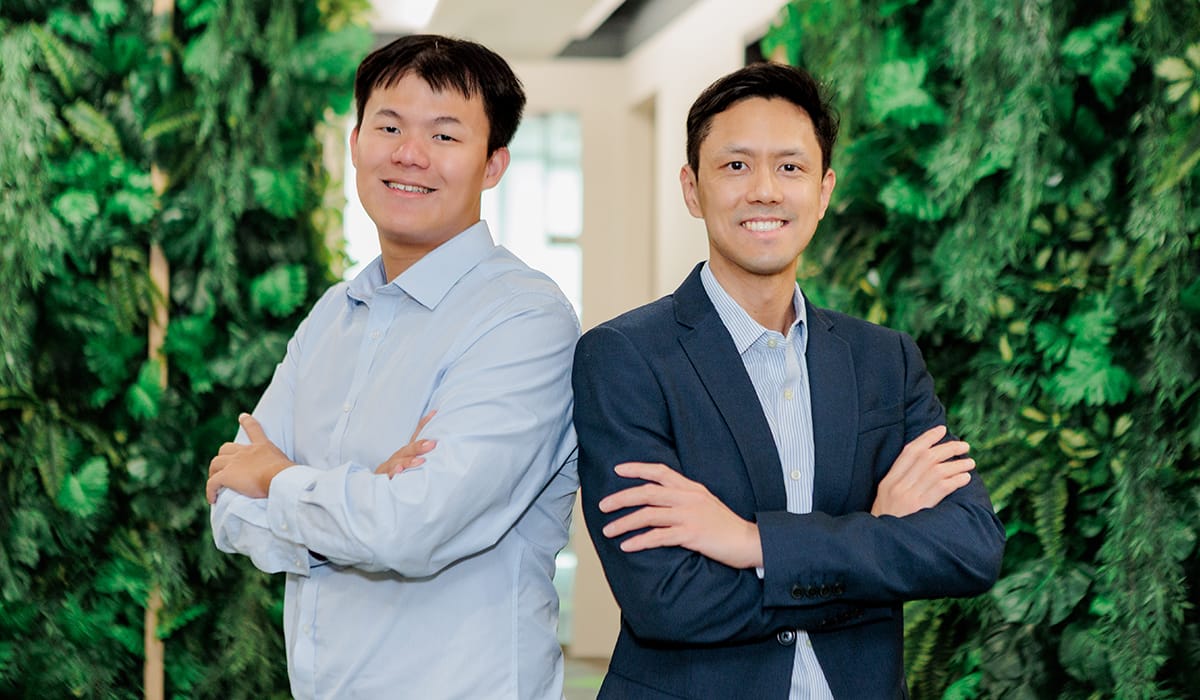
Left: Xavier Goh Jia Qing is an Assistant Manager, National Development in the Land Sale (Public) Division at the Singapore Land Authority. He is a recipient of the SLA Undergraduate Scholarship (Local) and holds a Bachelor of Social Sciences in Economics and Public Policy & Global Affairs from Nanyang Technological University.
Right: Lee Mou Jian is a Senior Geospatial Manager, GeoSpatial Policy at the GeoSpatial & Survey Division at the Singapore Land Authority. He is a recipient of the Singapore GeoSpatial Postgraduate Scholarship and holds a Master of Science in Social and Geographic Data Science with Merit from University College London.
Every park, road and building in Singapore is the result of meticulous planning and coordinated decisions behind the scenes, across various public agencies.
At the Singapore Land Authority (SLA), scholars Lee Mou Jian and Xavier Goh Jia Qing play key roles as enablers in the activation of space and the adoption of geospatial expertise in this process.
Mou Jian is a Senior Geospatial Manager in the GeoSpatial & Survey Division, while Xavier works as an Assistant Manager in the Land Sale (Public) Division. With expertise spanning geospatial innovation to public policy, they are part of a diverse team of professionals whose distinct roles contribute to advancing better land use for Singapore.
We sat down with Mou Jian and Xavier to learn how their journeys have unfolded into purposeful careers at SLA.
How did you discover your interest in geospatial work, Mou Jian?
Geospatial is an emerging industry at the forefront of Singapore’s Smart Nation and digital development efforts. My interest was sparked during a university module on Geographic Information Systems (GIS), where I enjoyed applying geographic and IT principles to solve social and environmental problems. A career in geospatial offers tremendous opportunities to pioneer new ways of advancing growth in our society and economy.
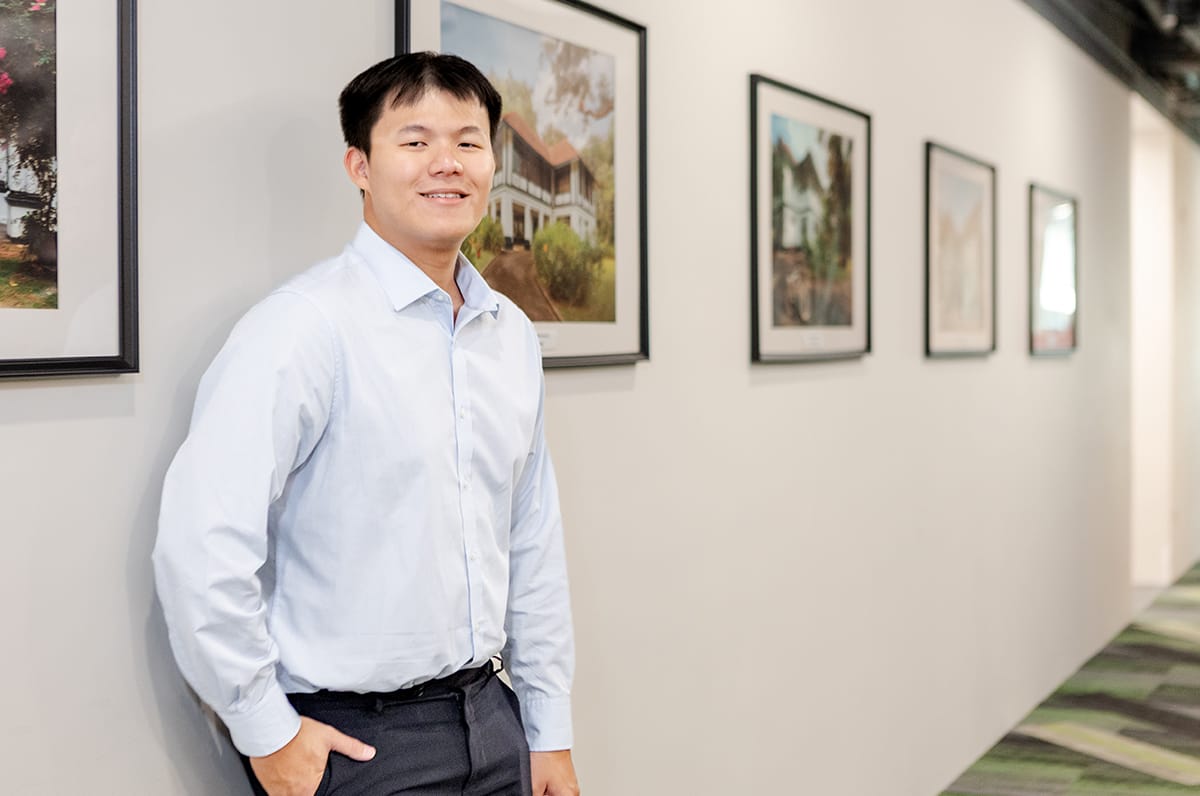
Xavier Goh Jia Qing
Xavier, what motivated you to apply for a scholarship with SLA?
SLA’s vision of creating unlimited space from limited land resonated with me. It captured the core idea of economics: making decisions that optimise the use of limited resources. I felt that working at SLA would give me a better understanding of how decisions are made in Government, especially in terms of managing land and resources. I saw the role as a chance to better understand the intricacies and processes in public administration, policymaking and economic decision-making, which will prepare me to navigate future challenges and uncertainties in today’s changing world.
In what ways has the scholarship facilitated your growth and prepared you for your current work?
Mou Jian: The scholarship not only provided me with strong technical expertise but also enabled me to learn how geospatial technologies can be harnessed to solve diverse challenges, both locally and abroad. This experience has made me more adaptable and better equipped to address geospatial needs here in Singapore.
Xavier: Having secured a position after graduation allowed me to fully focus on learning. SLA also supported my semester-long exchange in the United Kingdom, where I broadened my academic and cultural horizons and sharpened my communication skills.
Before embarking on a full-time stint at SLA, I was assigned a mentor whom I regularly met for discussions. Our conversations ranged from SLA’s work culture and management practices to policymaking and geopolitics. Her guidance was invaluable in preparing me for the transition from university to the workplace, and I’m truly grateful for her support.
I also completed an internship at SLA, which gave me a comprehensive overview of various departments and how they collectively work towards achieving SLA’s vision. Working alongside fellow interns on projects to optimise State resources helped me build meaningful friendships and prepared me to contribute effectively once I joined full-time.
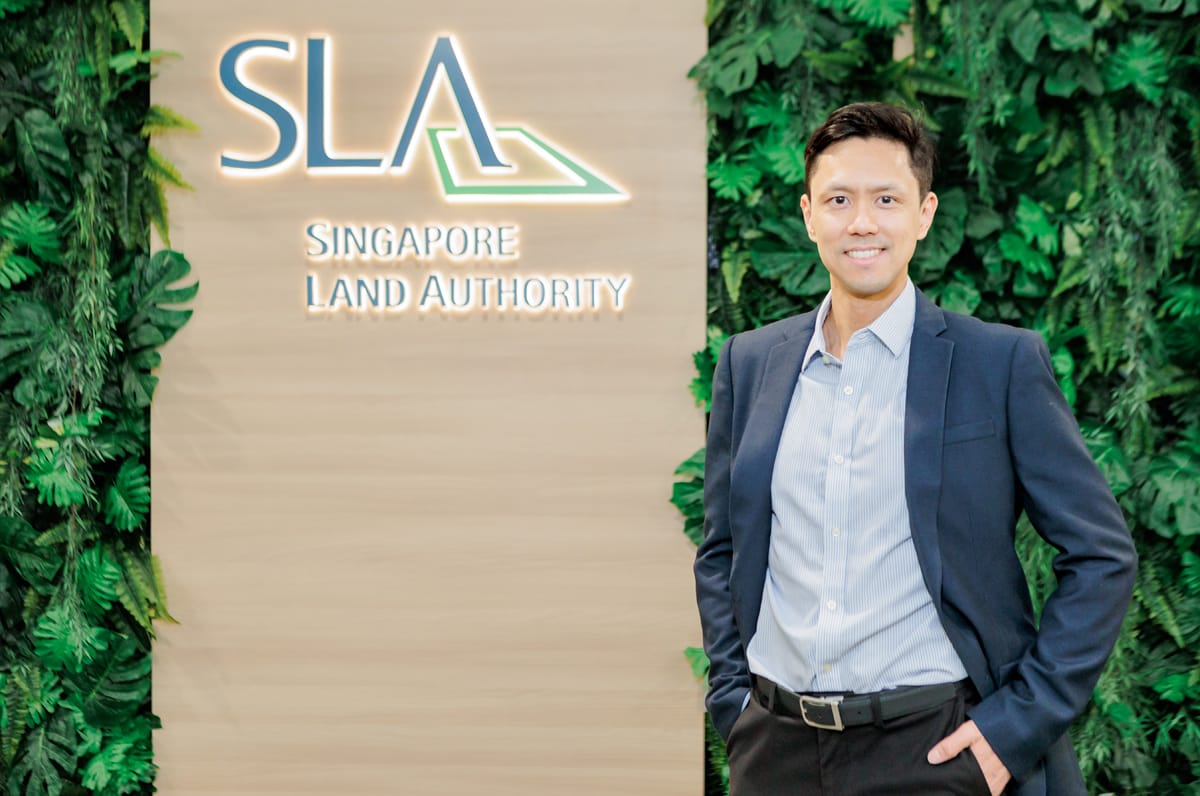
Lee Mou Jian
Could you elaborate on your current roles and key responsibilities?
Mou Jian: I help agencies become more productive by ensuring geospatial data is available and fit for their planning and operations. This means connecting different agencies that provide and use the data, understanding their needs, and developing solutions for data collection and sharing. Through ongoing engagement, I contribute to the building of the Government’s geospatial community—work that supports the urban spaces, infrastructure, and greenery we often take for granted.
Xavier: I’m in the Land Sale (Public) Division, managing land sale projects for public agencies and handling ad hoc land use requests. A key part of my role is stakeholder management. Through open communication and engagement, I identify and convey the perspectives and interests of internal and external stakeholders to build consensus and ensure timely closure of land sale cases. This understanding also supports policy reviews by addressing stakeholders’ concerns.
Xavier, what’s something interesting that you’ve learned on the job?
Before joining SLA, the central role of land in supporting and driving Singapore’s sustainable development did not appear obvious to me, especially since Singapore is a tiny island with no hinterland. Through my role, I’ve come to see how crucial SLA is in shaping how Singapore grows, how we live, and how we protect land as a valuable reserve for future generations.
What role has SLA played in shaping your professional growth, Xavier?
At SLA, I’ve found a supportive work culture with friendly colleagues and management that balances guidance with autonomy. Working under a competent and committed leadership team has deepened my understanding of stewardship, good governance, and leadership in practice.
Career-wise, constructive feedback and encouragement have been invaluable, along with opportunities to attend skillsbased programmes like learning and development initiatives such as Brown Bag Talks.
What can scholars expect when working at SLA?
SLA is a dynamic place. You’ll get to work on a range of issues, from optimising land resources to applying geospatial data and technology to benefit economic, social, and community good in Singapore.