Left: Edwyn Pek Zhen Wen is an Engineer in the Naval Systems Programme Centre at DSTA, and is a recipient of the DSTA Scholarship. He holds a Bachelor of Engineering in Electrical and Electronic Engineering from Imperial College London and a Master of Science in Business Analytics from University College London.
Middle: Samuel Leong Chee Weng is a Robotics Perception Engineer at DSO and is a recipient of the DSTA Scholarship. He holds a Bachelor of Science (Electrical & Computer Engineering) and a Master of Science (Electrical & Computer Engineering) from Carnegie Mellon University.
Right: Lim Wan Ning is an Engineer in the Cloud Platform Services at CSIT. She is a recipient of the DSTA Scholarship and holds a Bachelor of Computing in Computer Science from NUS.
Singapore’s defence strength extends beyond the frontlines. Behind the scenes, engineers and digital technologists in the Defence Technology Community (DTC) develop cutting-edge systems that equip the Singapore Armed Forces (SAF) and support wider national developments.
This mission resonates deeply with DSTA Scholarship recipients Edwyn Pek Zhen Wen, Samuel Leong Chee Weng, and Lim Wan Ning. Currently based at DSTA, DSO National Laboratories (DSO), and the Centre for Strategic Infocomm Technologies (CSIT) respectively, each has channelled a passion for engineering and digital technologies into meaningful work that strengthens Singapore’s defence.
They take us behind the scenes of their journeys—filled with purpose and growth.
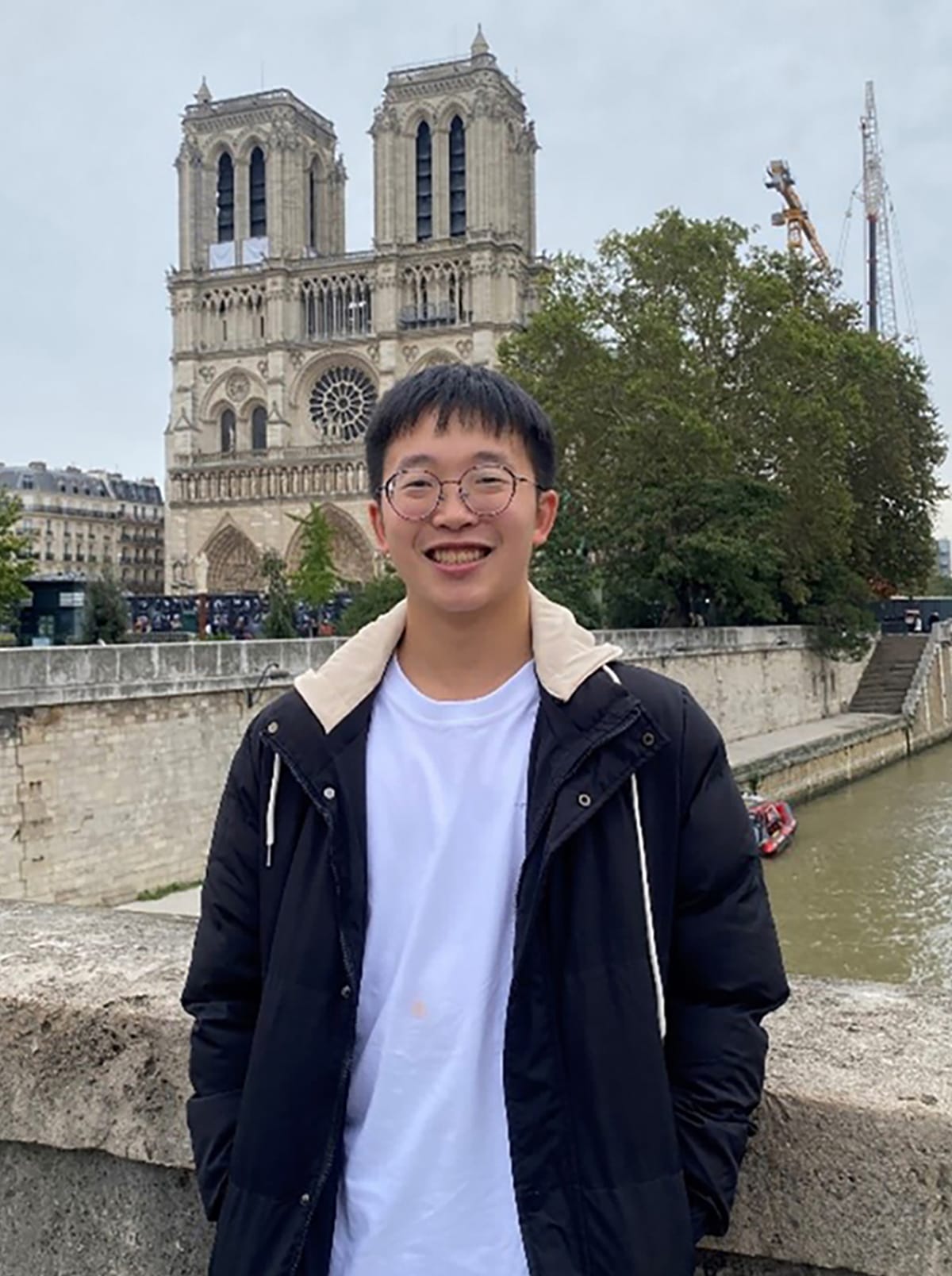
Edwyn Pek Zhen Wen
What first got you interested in engineering and digital technologies? Was there someone or something that inspired you?
Edwyn: My fascination with engineering began in school when I joined the School-Based Science Mentorship Programme and worked on securing Near Field Communication in Android phones. It was my first exposure to how science and technology could solve common real-world problems in practical and creative ways. I was also fortunate to have mentors who encouraged me to learn beyond the classroom and understand the ‘why’ behind things. That curiosity led me to where I am today.
Samuel: My interest in engineering started from young, largely influenced by my dad, an electrical engineer. From as early as I can remember, I was surrounded by puzzle games and Lego sets—fun yet great for honing creativity and problem-solving skills. One of my most memorable toys was a “SnapCircuits” set—basically Legos for circuits! Another vivid memory was receiving a Lego MINDSTORMS robotics kit after my PSLE, which feels prophetic now that I’m a full-time robotics engineer.
Wan Ning: Playing video games with my siblings sparked an early curiosity about how tech products work. This interest grew in secondary school through the robotics club, where I found myself more drawn to programming than hardware. Getting our line-tracing robot to work was especially rewarding—and it sparked my passion for innovation through technology.

Samuel Leong Chee Weng
How did the DSTA Scholarship align with your career aspirations, Wan Ning?
I was drawn to the DSTA Scholarship because it offers broad exposure across different defence tech agencies and projects, rather than following a fixed path. It strongly aligned with my goal of joining a tech community that tackles meaningful and large-scale challenges. The opportunity to contribute to national security through technology especially resonated with me.
In what ways have you benefitted from receiving the scholarship?
Edwyn: The scholarship has contributed tremendously to my growth. Beyond supporting my Bachelor’s and Master’s overseas, the scholarship also provided me with access to mentorship, hands-on experiences, and a community of like-minded individuals. Personally, it helped me build confidence and resilience. Professionally, I gained early exposure to multidisciplinary engineering projects that strengthened both my technical and soft skills, such as communication and teamwork.
Taking up the DSTA Scholarship not only gave me the opportunity to intern at DSTA, but also at Thales, as part of the Global Internship Programme. During these stints, I tackled real-world challenges such as system simulation, machine learning, and improving development workflows. These experiences deepened my understanding of the complexity of defence engineering and the importance of teamwork.
Wan Ning: I was also able to take on internships at DSTA and CSIT, where I explored domains like networking, augmented reality/virtual reality, and platform engineering. These experiences broadened my understanding of the defence tech landscape and helped me discover my interest in platform engineering. Being part of a purpose-driven community has pushed me to grow, not just technically, but also in confidence, adaptability, and clarity about the impact I want to make.
Edwyn and Samuel, what motivated you to pursue further studies, and how have your degrees equipped you for your current role?
Edwyn: As I approached the end of my bachelor’s degree in electrical engineering, I recognised the growing importance of data in decision-making, particularly in defence applications. Pursuing a Master’s in Business Analytics offered me a chance to complement my engineering knowledge with data-driven insights. Today, both skillsets—engineering and analytics—enable me to propose solutions that are technically sound and backed by data.
Samuel: “Get your theoretical foundations right, and the applications will follow.” That was one of the best pieces of advice I received from a senior at Carnegie Mellon University (CMU), who is now my colleague. I took that advice to heart, enrolling in a broad range of math, engineering, and robotics courses that built a strong theoretical foundation—even taking many master’s level modules during my undergraduate years.
Pursuing a Master’s in Electrical & Computer Engineering was a natural progression. Unlike some peers who feel that they rarely use their degrees in practice, I find myself applying mine every day. As a robotics engineer working on perception algorithms, the theoretical grounding and hands-on experience I gained at CMU have been crucial in helping me understand complex research papers and develop innovative solutions with my team.

Lim Wan Ning
You each bring a unique engineering focus to the table. Can you walk us through your area of expertise and your daily responsibilities?
Edwyn: As an Engineer at Naval Systems Programme Centre at DSTA, I work on integrating combat systems under the frigate mid-life upgrade programme. Daily tasks include systems design, project planning, reviewing technical calculations, and working closely with the SAF users to ensure that the solutions delivered meet operational requirements. The work is multidisciplinary and collaborative: through the various engagements, I got to work with many people at different levels and hone not only my technical skills but also my communication skills. I’m constantly learning.
Samuel: I am a Robotics Perception Engineer, designing algorithms for 3D LiDAR to help robots interpret their surroundings for tasks like obstacle detection and navigation. The challenge is creating realtime, efficient, and robust algorithms for varied environments and hardware. Robotics is highly multidisciplinary, making the teamwork aspect enjoyable.
Wan Ning: I am a Platform Engineer at CSIT, specialising in developing and customising platform solutions and productivity tools for isolated, air-gapped and on-premise environment. I focus on implementing and automating infrastructure solutions, resolving platform issues, and driving improvements in performance, scalability, and reliability, all while replicating an internet-like experience in isolated networks.
Samuel, what exciting projects have you been involved in recently?
I am currently working on a project involving multi-robot, multi-room exploration in a cluttered indoor environment. This is an open research problem still being explored in academia. As a fresh graduate, it has been thrilling to take charge of the perception system and work on projects at or close to the state of the art. One memorable moment was when we combined ideas from our own experience and research papers to design a system tailored to our unique context and requirements. We had many eureka moments—it felt like piecing together a Lego masterpiece from different sets without the manual!
How have your organisations supported your professional development?
Edwyn: DSTA has a strong culture of learning, teamwork and innovation. I have benefited from technical workshops, cross-disciplinary team projects, and overseas learning opportunities. My colleagues are always willing to share their knowledge and collaborate too. We are also encouraged to push boundaries with innovation while staying mindful of risk, cost, timelines, and performance. These experiences have helped me grow into a more holistic engineer.
Samuel: DSO prioritises staff learning by sending us for conferences like the IEEE International Conference on Robotics and Automation in Japan. It was exciting to see the latest advances in robotics and learn new techniques from leading researchers worldwide. These experiences keep us current and affirm that we’re moving in the right direction, while also offering valuable opportunities to connect with others in the field.
Wan Ning: CSIT has supported my growth by providing dedicated resources for industry training, such as the Certified Kubernetes Administrator course. I also had the opportunity to attend events like the STACK Developer Conference, where I connected with engineers across government agencies and gained valuable insights into their practices and products.
Edwyn, what are you hoping to learn or achieve in the next stage of your career?
In the short term, I am focusing on deepening my expertise in the integration of various combat systems. In the long term, I aspire to lead projects that develop next-generation defence capabilities for the Singapore Navy. I also hope to mentor younger engineers and give back to the community that has supported my journey.
What would you say to students keen on applying for the DSTA Scholarship?
Edwyn: Be curious and open-minded. DSTA individuals are not just technically strong but also adaptable and driven by purpose. If you are keen to grow your technical expertise while contributing to Singapore’s defence and security, do check us out!
Samuel: Remember, you are not just applying for a scholarship— you are also applying for a job. If possible, join the Young Defence Scientist’s Programme (YDSP), or take up an internship or research project at DSTA, DSO or CSIT before applying. These experiences are invaluable for understanding both the work and the culture of the organisation where you will be spending at least four years of your bond.
Wan Ning: Take time to understand what the scholarship entails, along with the work, mission, and culture of the agencies. This will help you decide if it truly excites you. Stay open-minded, be ready to learn, and everything else will fall into place.