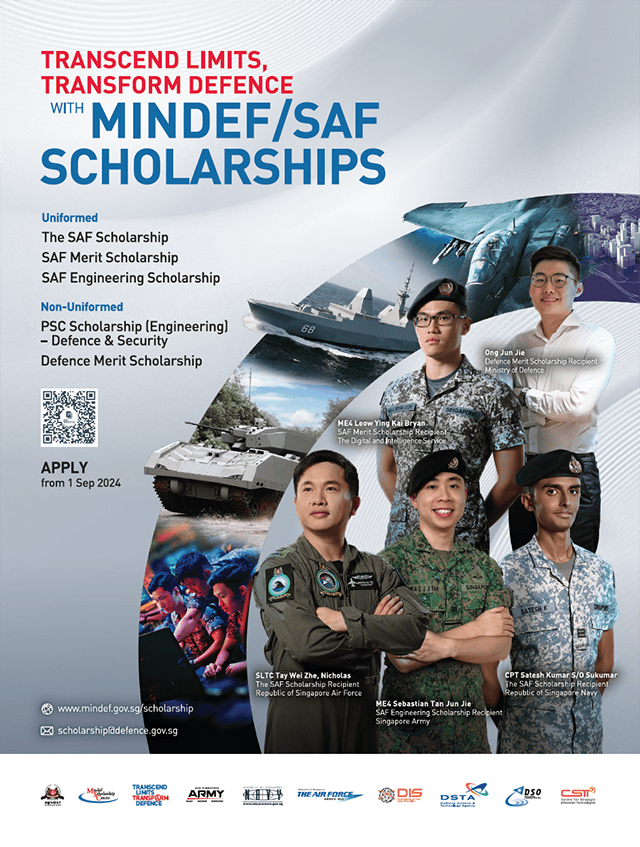
Collin Teo Jun Kai is an Assistant Manager at MINDEF’s Defence Policy Office and a recipient of the Defence Merit Scholarship. He graduated from University College London with a Bachelor of Arts in History, Politics and Economics. He also holds a Master of Law in International Relations from Peking University and a Master of Science in International History from the London School of Economics and Political Science.
What drives a nation’s security isn’t just military strength, but a deep understanding of the political and global forces at play. For Collin Teo Jun Kai, that interest took root early, fuelled by books and school debates that sparked his fascination with international affairs. In his first year of junior college, he had the chance to turn that passion into reality through a month-long internship at the Ministry of Defence’s (MINDEF) Defence Policy Office. There, he conducted research on emerging cyber norms and explored their implications for Singapore’s defence interests. “My colleagues offered me a peek at the work they did, and I thought that it would be a good fit for me,” he said.
That experience inspired Collin to apply for the Defence Merit Scholarship to study History, Politics, and Economics at University College London. With MINDEF’s support, he pursued further studies, completing a double master’s degree in International Affairs at Peking University and the London School of Economics.
Today, Collin is an Assistant Manager on the Middle East and South Asia desk at MINDEF, where he tracks regional developments and assesses their impact on Singapore’s defence ties. His work often involves close engagement with foreign embassies. “I am constantly reminded that building and maintaining a strong relationship with my counterparts is a crucial ingredient for success on the job,” he reflected.
During quieter periods, he contributes to strategic reviews with his team to assess the broader trajectory of Singapore’s ties with a country and the actions needed to strengthen them. When key visits or dialogues arise, the pace quickens, and Collin becomes directly involved in the planning and coordination that make these engagements possible.
Just months into his first posting, he was informed that he would be heading to Bahrain for the annual Manama Dialogue. Still finding his footing and not yet familiar with the discussions that would take place, he suddenly had to manage the necessary approvals for the trip and budget. Despite the steep learning curve, Collin never felt alone. “Even though we were a small team, everyone pulled their weight, and my colleagues were patient in guiding me,” he recalled. There were late nights in the office as preparations came together, but in the end the trip went smoothly. For Collin, it was a trial by fire — one that taught him the value of learning by doing.
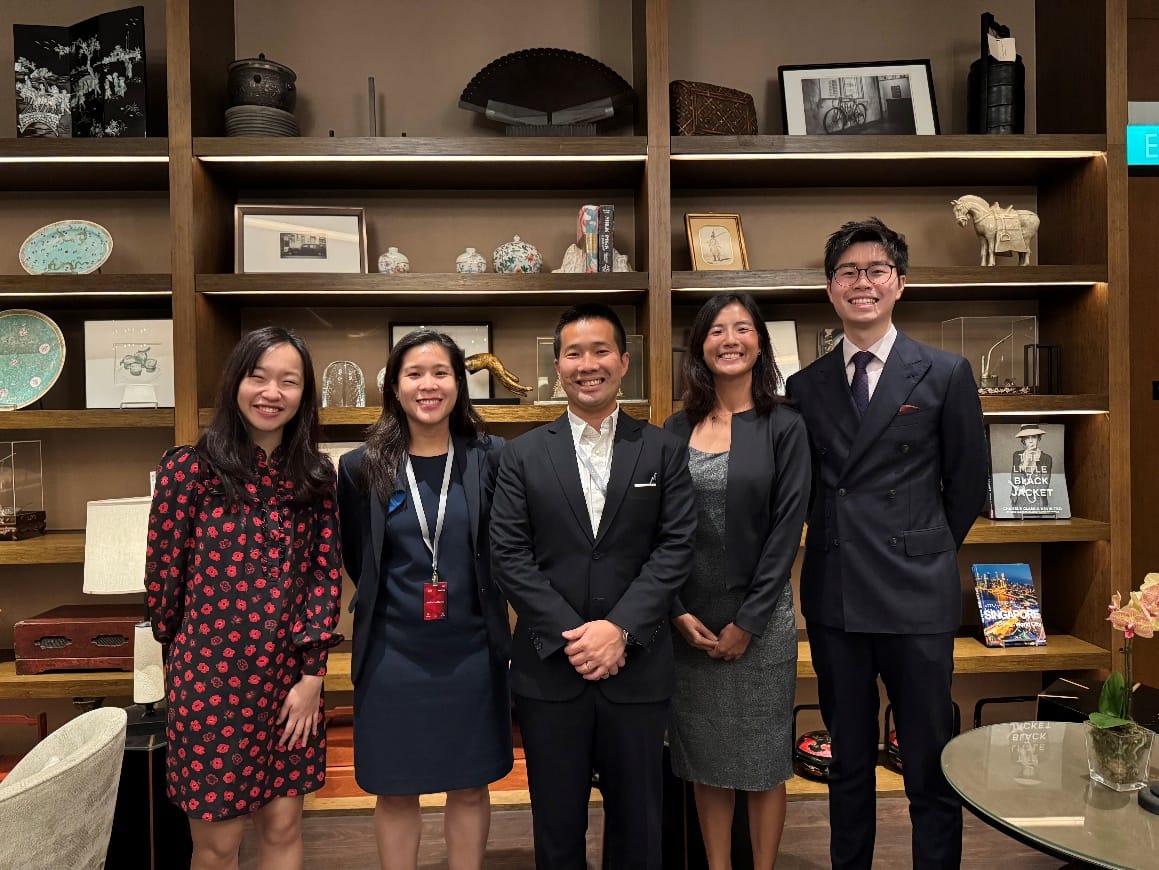
Collin with his boss and team at the Shangri-La Dialogue
Looking back, Collin credits his team for making those early months less daunting. “It’s 100% the people you work with — your teammates, your boss, your foreign counterparts, civil servants from the MFA — that make or break your experience,” he emphasised. "I am fortunate to have a wonderfully supportive team and boss in my first job — they have really helped me develop professionally.”
Beyond his core work, MINDEF also supported Collin’s pursuit of a summer programme at Columbia University in the United States. There, he studied US foreign policy and rekindled his love for art through an elective module. “MINDEF gave me this opportunity — to learn art, albeit at a basic level, at one of the best schools in the world.” That summer proved to be one of his most rewarding experiences, allowing him to sharpen his professional knowledge, reconnect with personal interests, and spend months immersed in some of the finest art museums and galleries in the world.
Collin continues to grow through MINDEF’s wider professional development opportunities. Officers are regularly rotated across assignments, with chances for overseas postings and inter-ministry stints. As a scholar, he is also part of the LEAD programme, which exposes young officers to projects beyond their immediate roles. “These projects are a good way to make connections within MINDEF and the SAF, and to be exposed to topics outside our usual scope of work,” he noted.
When asked what advice he would give to students considering a career in defence or the public service, Collin was candid: “Think carefully before applying. The hours can be long and demanding, and much of the work is not directly tied to financial rewards. Yet, it can also be deeply fulfilling. If you can, apply for an internship and speak with friends already in the public service. It’s important for young scholars to understand what they are committing to, beyond the prestige.”