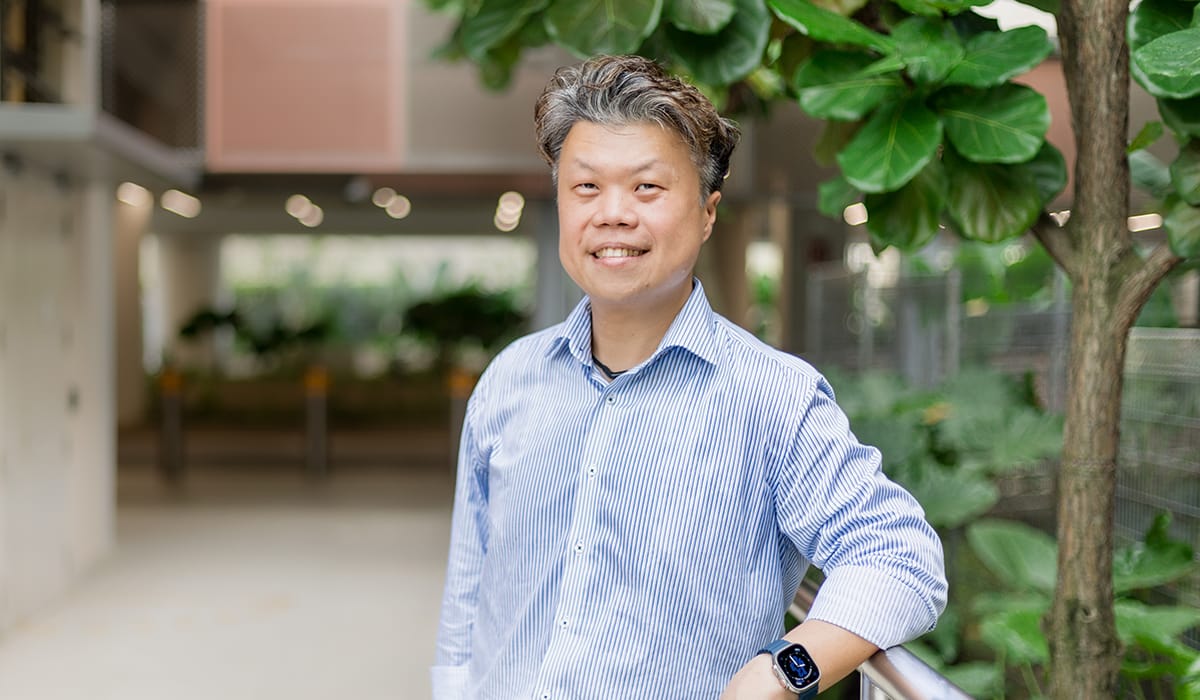
Raymond Fun is an Assistant Director of Nursing at Vanguard Healthcare Pte Ltd. He is a recipient of the Community Care Manpower Development Awards and is currently pursuing a Bachelor of Nursing (Top-up) at La Trobe University, offered in collaboration with the Singapore Nurses Association. He will be graduating in 2026.
Community care in Singapore plays a vital role in supporting patients after they leave acute hospital settings, and caring for seniors within the community. From nursing homes, senior care centres, hospices, as well as through home visits, Community Care staff provide essential support to help individuals live well and age gracefully at home or within the community.
For those looking to make a meaningful impact in the community, the Community Care Manpower Development Awards (CCMDA) provides a valuable opportunity. The award recognises passionate individuals who wish to grow their careers in the Community Care sector, offering support for educational and professional development—whether you are an in-service staff or a new joiner to the sector.
One such recipient is Raymond Fun, Assistant Director of Nursing at Vanguard Healthcare. His story exemplifies how leadership, compassion, and lifelong learning come together to deliver quality care and inspire the next generation of healthcare professionals.
What inspired you to pursue a career in the Community Care sector?
I graduated from Nanyang Polytechnic with a Diploma in Nursing and later pursued an Advanced Diploma in Nursing to further my clinical expertise. After gaining years of experience in the Community Care sector, I recognised that continued education was essential to adapt to the evolving healthcare landscape. Enrolling in the Bachelor of Nursing programme was a natural next step to deepen my knowledge and further my professional growth, and I was awarded the CCMDA in 2024.
During the early stages of my diploma studies, I was unsure of what I wanted to do in the future. I had my first student placement in Alexandra Hospital and that changed everything. It gave me a chance to interact with patients and allowed me to apply the nursing knowledge I had learnt in school to real-life patients. That one-month placement set the foundation for me and sparked my passion for nursing.
I had not initially set out to pursue a career in community care. Over time, opportunities led me to this sector, where I’ve spent the last 10 years. I now consider it the most fulfilling and rewarding role I have ever undertaken.
How has the award contributed to your professional and personal growth?
The CCMDA presented a valuable opportunity for me to further my professional growth in this sector. As our population ages, I believe that the knowledge gained will translate to providing better quality care to our seniors.
The Bachelor’s programme has also opened doors for me to connect with professionals from diverse fields and to exchange valuable insights with fellow leaders in community care. It has broadened my perspective, strengthened my commitment to serve as a role model, and inspired me to lead by example—motivating my team to make a meaningful difference in the lives of our residents every day.
On a personal level, I deeply appreciate this opportunity to grow and make a meaningful difference to the Community Care sector. Additionally, I would like to inspire my two sons to embrace continuous lifelong learning as a core value.
Could you walk us through your journey at Vanguard Healthcare?
I began my journey with Vanguard Healthcare in 2016, as a Nurse Manager in Pearl’s Hill Care Home. In 2018, I was promoted to Senior Nurse Manager, and in 2019, I had the opportunity to be involved in the setup of a new care home for Vanguard Healthcare. These experiences equipped me with operational insights and leadership skills. Most recently, in 2025, I was promoted to Assistant Director of Nursing, overseeing two care homes in the East-Central cluster of Vanguard Healthcare.
Beyond overseeing the two homes, my additional responsibilities include recruitment, conducting training sessions, and serving as the Chief Infection Control Nurse for Vanguard Healthcare.
Can you describe some initiatives that Vanguard Healthcare has implemented to enhance care?
We focus on three key areas to stay ahead of industry demands: education, technology, and collaboration. Vanguard Healthcare has been accredited by the Institute of Technical Education (ITE) to provide dementia and home care training for our care staff. This is imperative due to the high demands of caring for seniors with dementia as well as providing support to their caregivers.
More recently, Vanguard Healthcare has also been accredited as a training centre by the Singapore Resuscitation and First Aid Council (SFRAC) to conduct Basic Cardiac Life Support (BCLS) programmes for our staff.
On the technology front, one of our care homes has been designated to pilot innovative solutions to enhance patient care and safety, before rolling out to all care homes. Some examples include a fall prevention system as well as an AI-enabled app for wound management. Collaborating with healthcare clusters also allows us to enhance care models, promote patient safety, co-develop protocols, and reduce hospital admissions—all contributing to a better quality of life for our residents.
What is one initiative you’re particularly proud of?
As a Chief Infection Control Nurse, I played a key role in addressing inconsistencies in infection control practices across Vanguard Healthcare care homes. Recognising the need for a more standardised approach, we implemented cross-home audits and sharing areas of improvements centrally across all homes and to the ward staff. By fostering open communication and incorporating frontline feedback and implementing changes, the initiative led to improved compliance and strengthened the overall culture of infection control.

Raymond Fun
How do you foster effective collaboration within your multi-disciplinary team?
A crucial aspect of leadership is cultivating a positive and cohesive team environment where everyone understands their roles. While overlapping responsibilities may sometimes lead to friction, my role is to recognise individual dynamics and build on complementary strengths to achieve the best outcomes for our residents.
The team is strongly encouraged to build meaningful relationships with our seniors and contribute to their overall well-being. For nurses, this means applying clinical reasoning and skills to meet the complex needs of seniors. We also highlight the privilege of caring for residents in their golden years, reminding the team of the meaningful impact they make in delivering dignity and comfort.
What aspects of working in the Community Care sector do you find most rewarding?
One of the most fulfilling aspects of working in the Community Care sector is witnessing compassionate, well-trained staff positively impact the well-being of individuals and families. Whether it’s supporting seniors in maintaining independence, assisting people with disabilities to improve mobility, or ensuring vulnerable populations receive proper attention, making a meaningful difference in people’s lives is incredibly rewarding.
Any advice for those aspiring to take on leadership roles in community care?
The demand for nurses will continue to rise with our ageing population. Community care is evolving, shaped by advancements in technology, artificial intelligence (AI), and telemedicine—all of which are transforming workflows and improving efficiency.
It is essential to stay committed to continuous learning and not fear setbacks, as they build resilience which is crucial for navigating future challenges. Lifelong learning also sharpens leadership skills and encourages us to think critically and adaptively in a rapidly changing environment.