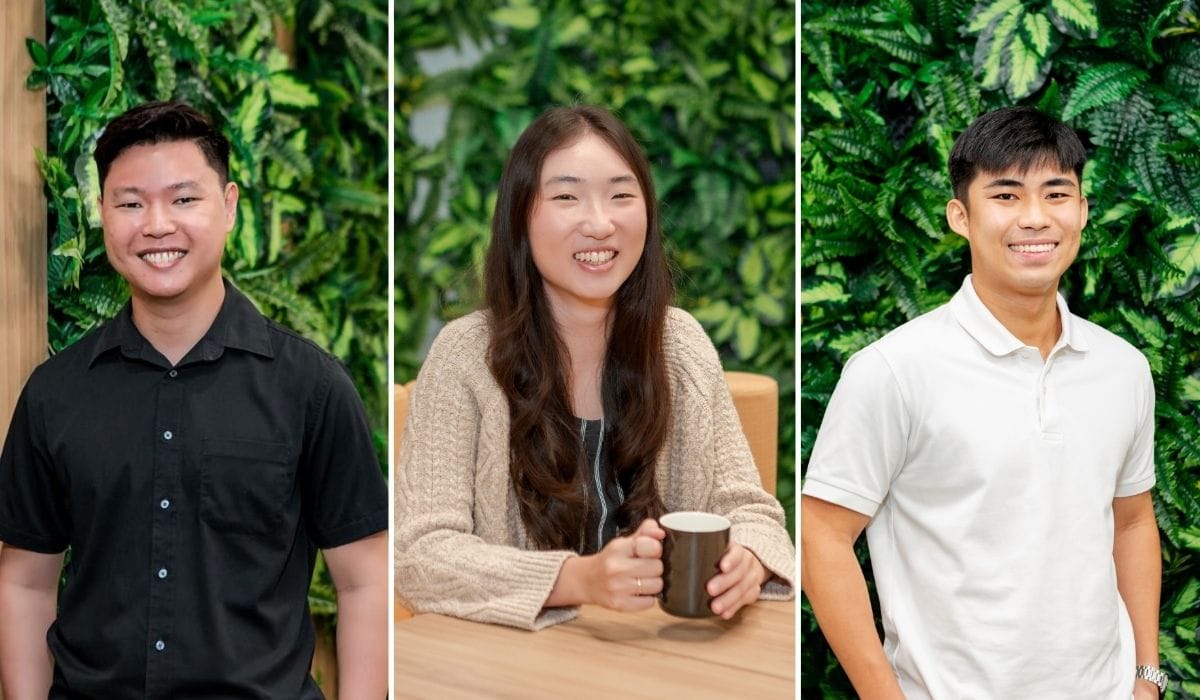
Ryan Kwok, Samantha Yom, and Lee Penn Han
From the apps we use every day to the systems that keep Singapore running, technology touches almost every part of our lives. Ryan Kwok, Samantha Yom, and Lee Penn Han see it as more than just a tool; it’s a way to solve problems and make a real difference to people’s lives.
Through the Smart Nation Scholarship (SNS), they’ve turned their passion for tech into action. Jointly offered by the Cyber Security Agency of Singapore (CSA), the Government Technology Agency (GovTech Singapore), and the Infocomm Media Development Authority of Singapore (IMDA), the scholarship develops deep technnology talent and future leaders. It equips scholars with the skills, experiences, and opportunities to create digital solutions that benefit people in Singapore. For Ryan, Samantha, and Penn Han, it has been a launchpad for careers that combine innovation, purpose, and impact. They share with us their journeys in their own words.
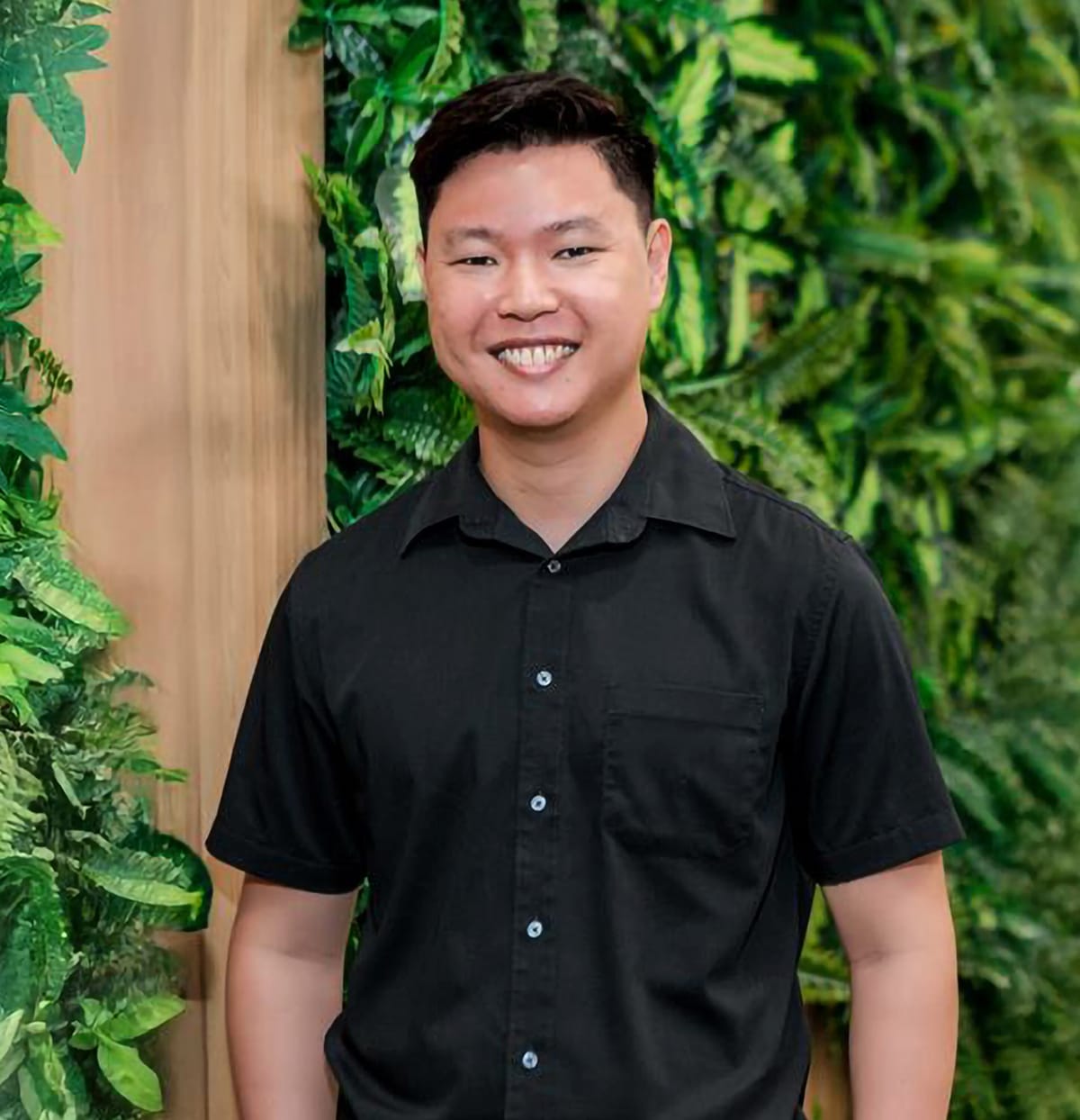
Ryan Kwok
Why did you choose to pursue a career in tech?
Ryan: My interest in cybersecurity began after watching the American drama thriller Mr Robot. The main character, a cybersecurity engineer by day and vigilante hacker by night, piqued my curiosity. I found the protagonist’s double life intriguing, and this character inspired me to explore cybersecurity further. Before entering university, I started taking online courses and eventually earned the Certified Ethical Hacker certificate. This certification helps cybersecurity professionals build deep, hands-on expertise in penetration testing, network security, and web application security. It enables ethical hackers to identify and fix vulnerabilities in systems before malicious hackers can exploit them. This early exposure gave me a taste of what a career in cybersecurity could be like, and from there, I was hooked.
Samantha: It was a chance encounter during my internship, building a chatbot for the Singapore Sailing Federation, that kindled my interest in tech. It was fascinating to be able to build a product that solves the needs of the community in an engaging, meaningful, and productive way. The experience inspired me to pick up more advanced tech skills to develop other user-centric products like this.
Penn Han: I wouldn’t say I had one defining “aha” moment. I grew up during the rise of Instagram and Facebook, so tech was always part of my world. In fact, my secondary school was also one of the first where every student had a MacBook. This gave me exposure to technology from a young age, but I didn’t immediately think of it as a career. I just knew I wanted to do something inventive.
It was during my time in the army that I really started noticing computing becoming popular, so I started reading more and realised it could be a career that combines creativity and logic. Fun fact — I’m actually the first person in my family to work in tech!
That’s inspiring! What made the SNS the right fit for you?
Ryan: I’ve always believed that technology should serve a greater purpose — improving society. The SNS enabled me to leverage my technical knowledge to make a meaningful impact on the lives of people in Singapore. It aligns perfectly with my passion for technology and my desire to contribute to the nation’s digital transformation.
Samantha: While I majored in psychology and linguistics during my undergraduate studies, I figured I wanted two things for my career — to grow exponentially in my technical and soft skills and combine my passion for service with making measurable impact. The SNS provided me with prized opportunities to pursue a master’s in tech and a network of mentors and tech professionals that would enable me to achieve my goals.
Penn Han: What really stood out was how the SNS ties technology to public good. Being in IMDA, CSA or GovTech Singapore means you’re not just building cool things, you’re doing work that actually helps people. I was also drawn to how it lets you focus on the human side of technology. A lot of problems today are really social problems, and tech is one of the ways we can make life better for others.
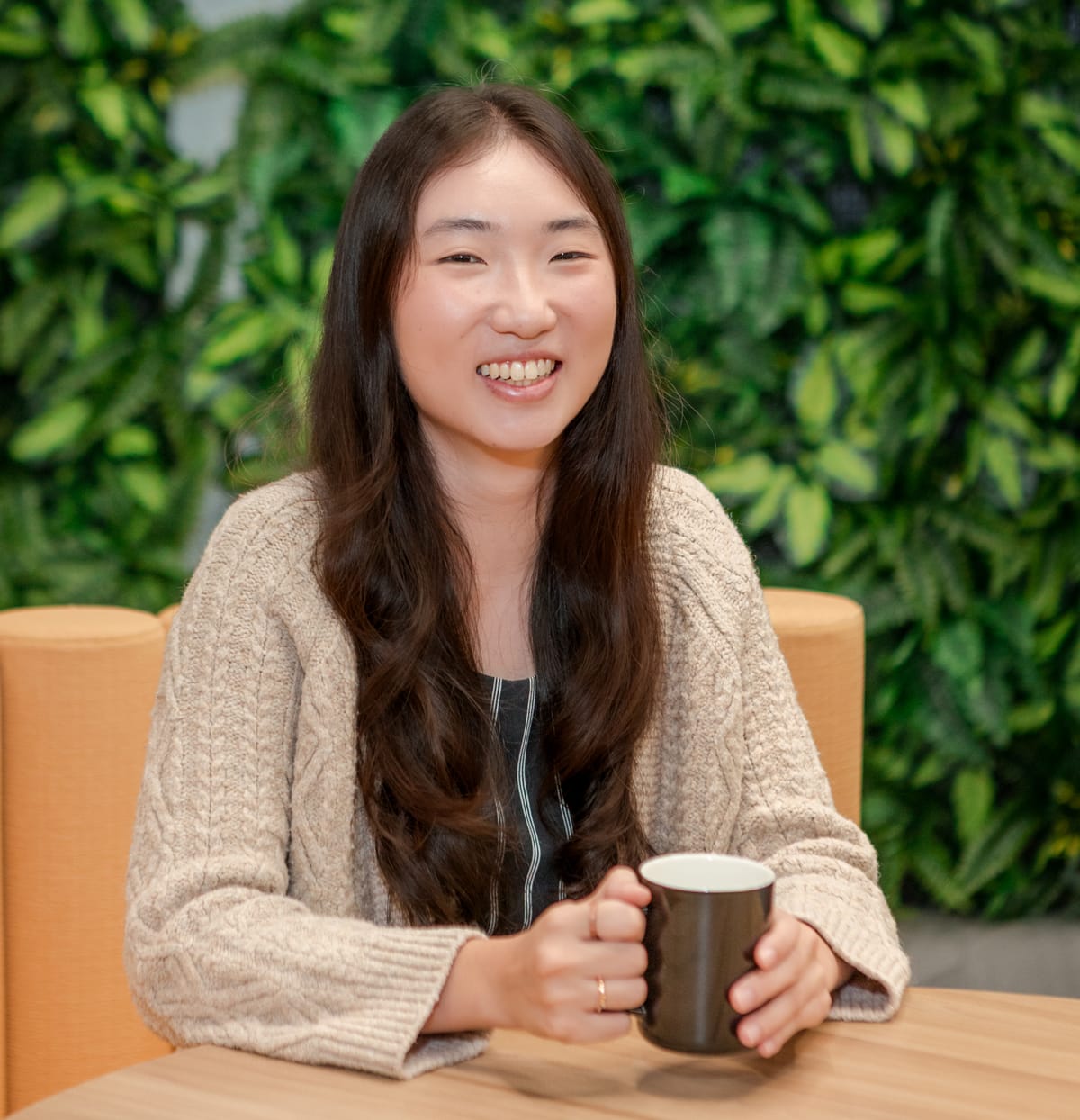
Samantha Yom
Can you share some highlights of your scholarship journey?
Ryan: The scholarship has accelerated my career by providing access to professional training and cybersecurity certifications, such as COMPTIA’s Security+, EC-Council’s Certified Ethical Hacker, and Computer Hacking and Forensics Investigator. It has also allowed me to explore areas beyond cybersecurity, such as machine learning and cloud technologies, and given me the flexibility to expand my technical horizons.
Samantha: The SNS granted me an opportunity to study tech in the US, which was eye-opening. I learned alongside peers from diverse backgrounds, diving into ideas and topics that genuinely excited me. I also interned at a startup in San Francisco, right at the heart of innovation. The experience gave me a peek into the future and helped me understand the culture that fuels such innovation.
Penn Han: The scholarship has been very supportive of both academic and personal growth. There are funds for upskilling, overseas exchanges, and even personal development courses. I also had the chance to do internships with IMDA during my school holidays, which opened my eyes to how tech is applied to real public initiatives.
Beyond that, there’s a strong community of like-minded scholars. It’s inspiring to be surrounded by passionate people; it keeps you motivated and pushes you to do better.
Give us a peek into the projects you’re tackling today!
Ryan: How many apps do you have installed on your phone? Can you be sure that all of them are legitimate, safe and secure? Apps are an integral part of our daily lives, but they can also be vulnerable to cybersecurity attacks. My work focuses on mobile app security, identifying potential vulnerabilities and devising solutions to protect users. It’s about keeping the digital space secure for all.
Samantha: I’m working on AIBots, a product that allows public officers to build customised bots that help them save (lots of) time on work that can be done by AI. We work in small teams and often lean on the strengths and experience of other engineers, as we try to develop innovative solutions in a fast-growing field like AI. It’s always heartening to see the different — and often creative — ways people use AIBots. Knowing what we build directly addresses users’ needs and adds tangible value to their work is what I find meaningful.
Penn Han: I’d describe my role as a plate of ‘cai fan’. The rice is software engineering, but I also get side dishes like policy, security, and stakeholder engagement — every day looks a little different, which keeps things interesting.
Under the Associate in Infocomm Media (AIM) Graduate Development programme, I split my time between two areas: about 80% in the BizTech group, where I work on AI projects like Project Moonshot and GPT-Legal that explore both AI adoption and AI safety; and 20% with the Connectivity, Cybersecurity, and Resilience (C2R) group, where I look into telecom regulations and think about the transition towards quantum-safe infrastructures. It’s a great mix of engineering and policy, and I enjoy seeing how technology connects to long-term national planning.
Can you share a project you’ve enjoyed working on, Penn Han?
Definitely GPT-Legal. It’s a collaboration with the Singapore Academy of Law, and we’ve just launched Phase 2 — a Q&A model trained on Singapore contract law. Seeing it used by lawyers has been a huge motivation. As an engineer, it’s satisfying to build something that makes a tangible difference, while also challenging myself to think about AI safety and responsibility as the tech evolves.

Lee Penn Han
Ryan, as a CSA Ambassador, you’ve given talks about cyber safety and careers in public-sector cybersecurity. What were those experiences like?
It’s fascinating to see how immersed younger students are in technology today. Many already use digital platforms extensively, but discussing cybersecurity really opened their eyes to how vulnerable these platforms can be. Sharing insider tips — like how cyber threat actors exploit the dark web and black markets — was particularly engaging. Some students even expressed interest in pursuing careers in cybersecurity, which was incredibly rewarding to see. It’s inspiring to witness that spark of curiosity and the potential of the next generation of cybersecurity professionals.
Samantha, surprise us with a fun fact about your role!
As a Software Engineer developing AI products, I am actively encouraged to leverage AI to streamline my daily tasks. I often use it to summarise lengthy logs or quickly grasp new topics, but I always ensure thorough checks and remain fully accountable for the work I produce.
Any tips for aspiring scholars?
Ryan: As a Smart Nation Scholar, you gain access to a wide range of opportunities, including internships with CSA that help you hone your cybersecurity skills. Scholars also participate in the Cybersecurity Development Programme (CSDP), which involves technical training, opportunities to interact and learn from senior leadership and even training in areas like communications and stakeholder management. It’s a comprehensive programme that equips you to take on impactful roles in cybersecurity.
Samantha: It helps to be authentic and self-aware; be clear about what you’re passionate about, what you aspire towards, and why you do what you do. Let these guide your decision to apply and how you approach the interview. Don’t be afraid to ask questions! Some of my biggest takeaways came from the insights shared by the interviewers themselves.
Penn Han: Go for it! It’s a great way to do meaningful tech work for Singaporeans. You get to work on exciting projects with real impact, and there’s so much progress to be made. If you’re passionate about both technology and purpose, this is a great place to be.
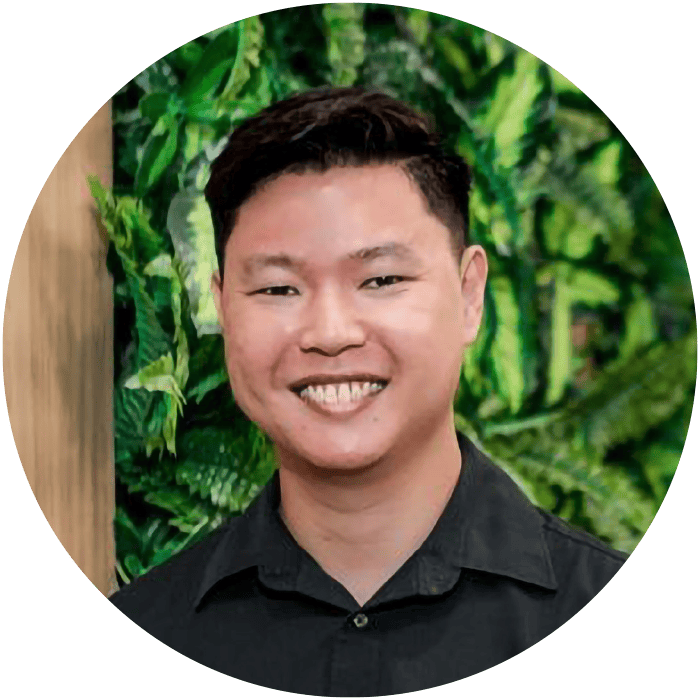
Ryan Kwok
Smart Nation Scholar
Cybersecurity Engineer, Cyber Security Agency of Singapore
Bachelor of Computing (Information Security), NUS
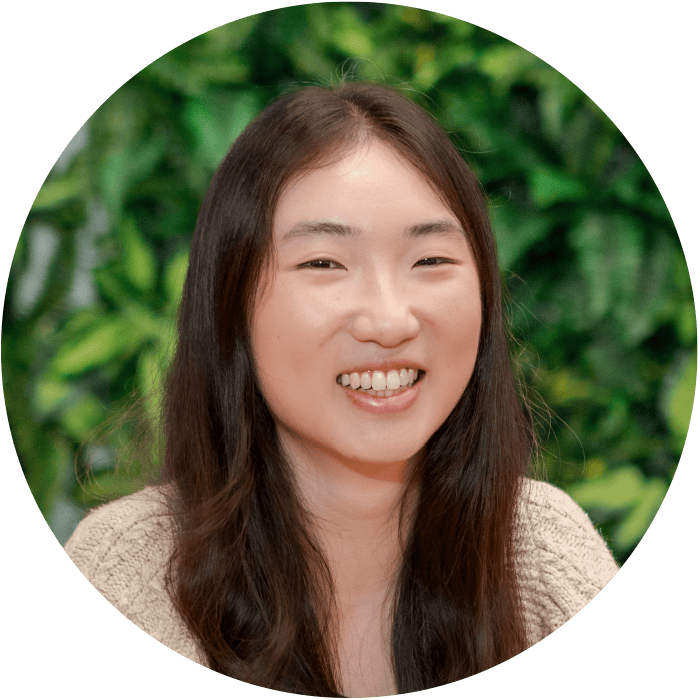
Samantha Yom
Smart Nation Scholar
Software Engineer, Content & Insights Management, GovTech Singapore
MSc in Computer Science, University of Chicago
BA in Psychology and Linguistics & Multilingual Studies, NTU

Lee Penn Han
Smart Nation Scholar
Assistant Manager, Advanced Intelligent Software Systems, Infocomm Media Development Authority of Singapore
MSc in Computing (AI and Machine Learning), Imperial College London
Bachelor of Computing (Computer Science), NUS