Yeong Qian Hui
Growing up in a family of civil servants, Yeong Qian Hui learned early on what dedication and responsibility in meaningful work looked like. That upbringing sparked her interest in roles where she could make a real impact, and she was particularly drawn to MINDEF for its focus on international affairs and diverse opportunities to gain experience.
Being awarded the Defence Merit Scholarship (DMS) enabled Qian Hui to study overseas and gain early exposure to MINDEF before starting a full-time role in the Defence Policy Office (DPO). Today, as Senior Manager (National Service Resource) at the National Service Policy Department (NSPD), she develops policies to optimise National Service (NS) resources while ensuring continued public support.
We sat down with Qian Hui to get an inside look at her work and the experiences that have defined her career.
How did receiving the Defence Merit Scholarship help kickstart your journey?
The scholarship enabled me to pursue a course of study I was interested in — history — abroad, at Durham University and the University of Cambridge. It also allowed me to explore beyond my immediate field of study through a summer programme on Human Security at Sciences Po. Having secured a job for after graduation, I also had the privilege of time during my studies to pursue other interests such as orchestra and archery.
I also completed internships with MINDEF during my studies, which gave me a taste of the work that MINDEF does, and met several officers who have since been invaluable sources of guidance as I began my career. I’m grateful that the internships allowed our paths to cross.
What drew you to study history at university, and how has it shaped the way you approach your work today?
My interest in history grew over the course of secondary school and junior college, and it felt like a natural choice to pursue the subject at university. The training I received in writing and critical thinking gave me a strong foundation for preparing submissions and policy papers. It also gave me an appreciation of historical contexts in policymaking — understanding why certain decisions had been made in the past, and how and why policies have evolved — which helps in making recommendations that are feasible and impactful. An added advantage of studying history is the patience it fosters for trawling through archives — a skill I have definitely had to draw on in my work!
Having recently moved from the Defence Policy Office to the National Service Policy Department, what’s been the biggest shift for you?
Everything has required adjustment, as I moved from a role focused on Singapore’s external defence relations to one centred on policies that impact Singaporeans more directly. The stakeholders I interact with, the policies I work on, and the considerations I take into account when making recommendations are all different.
Perhaps the greatest change has been the sense of mission. In DPO, I worked to help safeguard and strengthen Singapore’s defence relations with key partners in Oceania and Southeast Asia. In NSPD, I work to help ensure a healthy manpower stream for NS while maintaining public support. Experiencing these different missions has given me a clearer perspective on how multifaceted MINDEF’s responsibilities are in ensuring Singapore’s security. Keeping the broader mission in mind also helps me to contextualise the work I do daily.
Is there a project you’ve worked on that stands out to you?
A memorable project was participating in negotiations with a foreign country. The negotiations have been long-running and complex, and participating in them required me to conduct extensive research into both countries’ positions and how the negotiations have progressed. It also gave me a deep understanding of MINDEF’s and the SAF’s interests and positions, as well as those of other government agencies, and how they were combined to form our national interest. Additionally, I gained insight into negotiation strategy and had the chance to see it applied in practice, while interacting with colleagues across agencies and learning from their perspectives.

Yeong Qian Hui
Which achievement in your career are you most proud of, and why?
I am most proud of my role in the successful conduct of the Five Power Defence Arrangements (FPDA) Defence Ministers’ Meeting (FDMM) in 2024. For context, the FPDA is an important and long-standing part of our regional security architecture, while the FDMM is the pinnacle decision-making forum for the FPDA, bringing together defence ministers from all five member-nations. Singapore hosts the FDMM only once every six years.
There was a mountain of preparatory work that went into making the FDMM a success; my colleagues and I managed everything from the then-Minister’s talking points to seating and security arrangements. This meeting was a success, with member nations reaffirming their commitment to the FPDA at the highest levels, and agreeing on its strategic direction and ways to enhance cooperation in the coming years.
How has MINDEF helped you grow both personally and professionally?
Working in MINDEF, primarily in DPO, has boosted my confidence and allowed me to find my voice, thanks to a lively office culture, interactions with foreign counterparts, and the many opportunities to discuss issues directly with senior management. I’m also grateful for the friendships and camaraderie I’ve built along the way.
Professionally, MINDEF has given me a broad view of the organisation, from overseas training and operational planning to legal frameworks and pre-enlistment processes for full-time NS. I have even been able to observe exercises such as Exercise Wallaby during overseas visits — experiences I did not expect when I first took up the scholarship. Beyond my immediate role, I’ve had the opportunity to stretch my abilities in other areas, including being part of the speechwriting team for our Committee of Supply debates last year.
What kinds of career or growth opportunities are there at MINDEF?
As a DMS award holder, the pathway for career progression at MINDEF is fairly structured. Officers are encouraged to move to new roles every few years to gain experience across different domains, and there are opportunities to seek guidance and mentorship from senior colleagues. MINDEF is a large organisation, with departments ranging from well-established areas like DPO and NSPD to emerging functions as the organisation evolves.
My advice to students considering a career here is to take a leap of faith — there is something for everyone, and the journey will be rewarding.
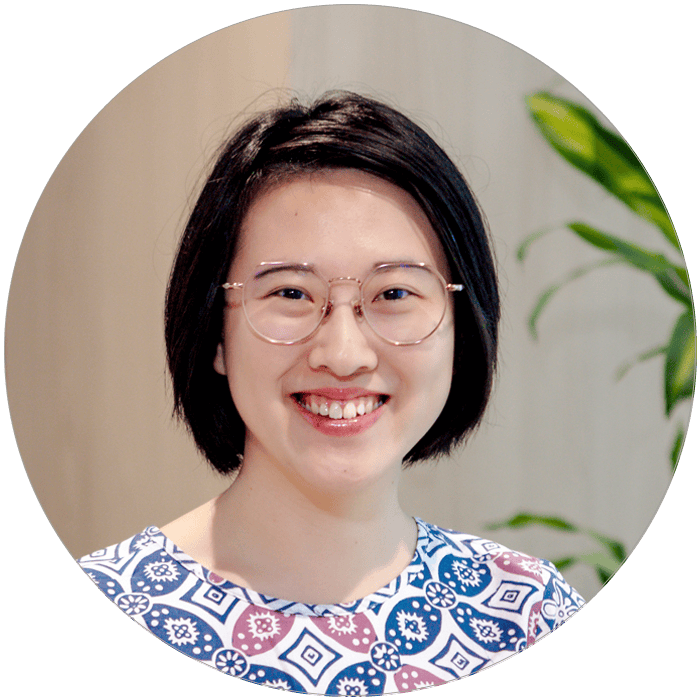
Yeong Qian Hui
Defence Merit Scholar
Senior Manager (National Service Resource)
MPhil in World History, University of Cambridge
BA in History (First Class Honours), Durham University