Survey Highlights
For over a decade, the BrightSparks Scholarship & Education Survey has provided an in-depth examination of student mindsets, priorities and sources of information and guidance. This year, too, the results of the survey once again offer a rich source of insights into how GCE-A Level and International Baccalaureate (IB) students, as well as polytechnic students and graduates think and feel about the educational and employment landscape. Using these findings as a foundation, scholarship providers can more effectively shape their marketing, communication, and outreach efforts to connect meaningfully with their target audience. We thank you for your continued support of BrightSparks.
Intention to Pursue Further Studies
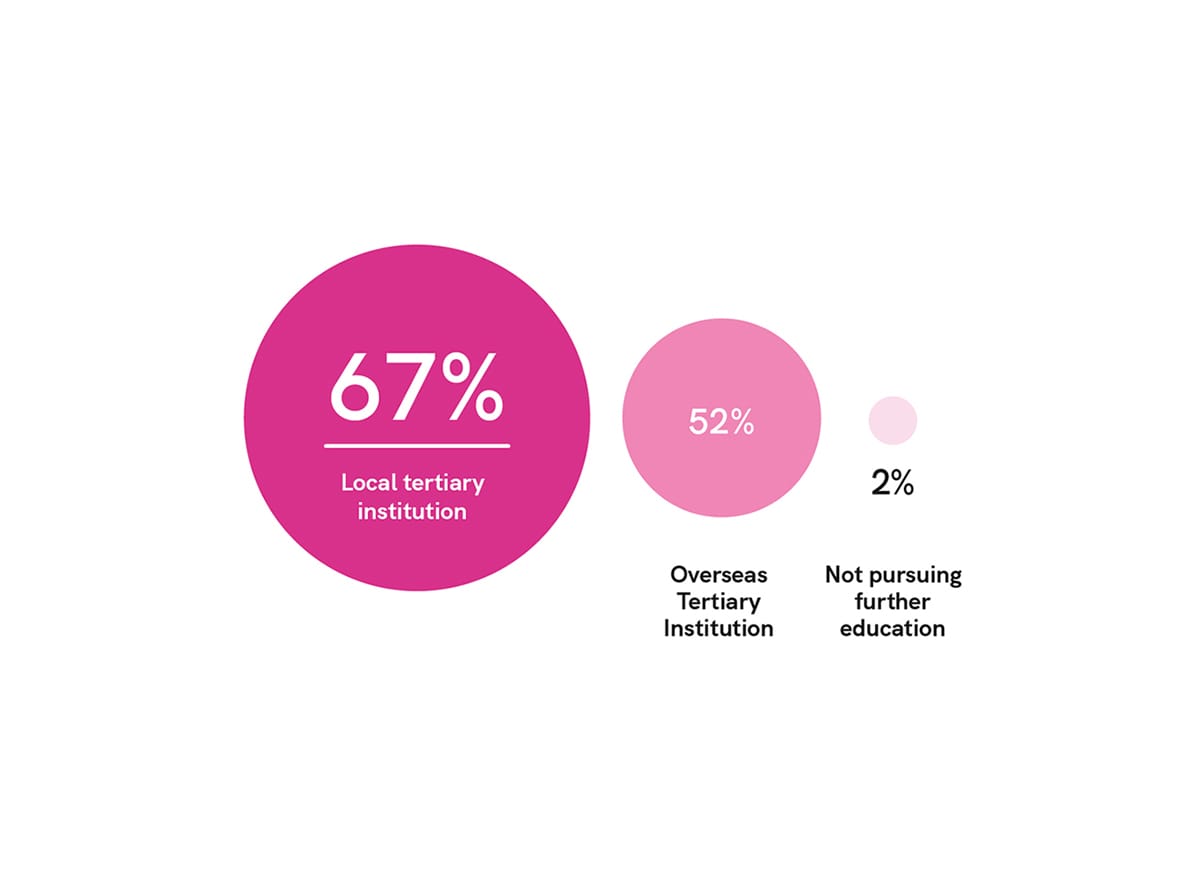
Interest in overseas education has increased slightly this year among top JC/IB students.
Intention to Pursue Scholarship
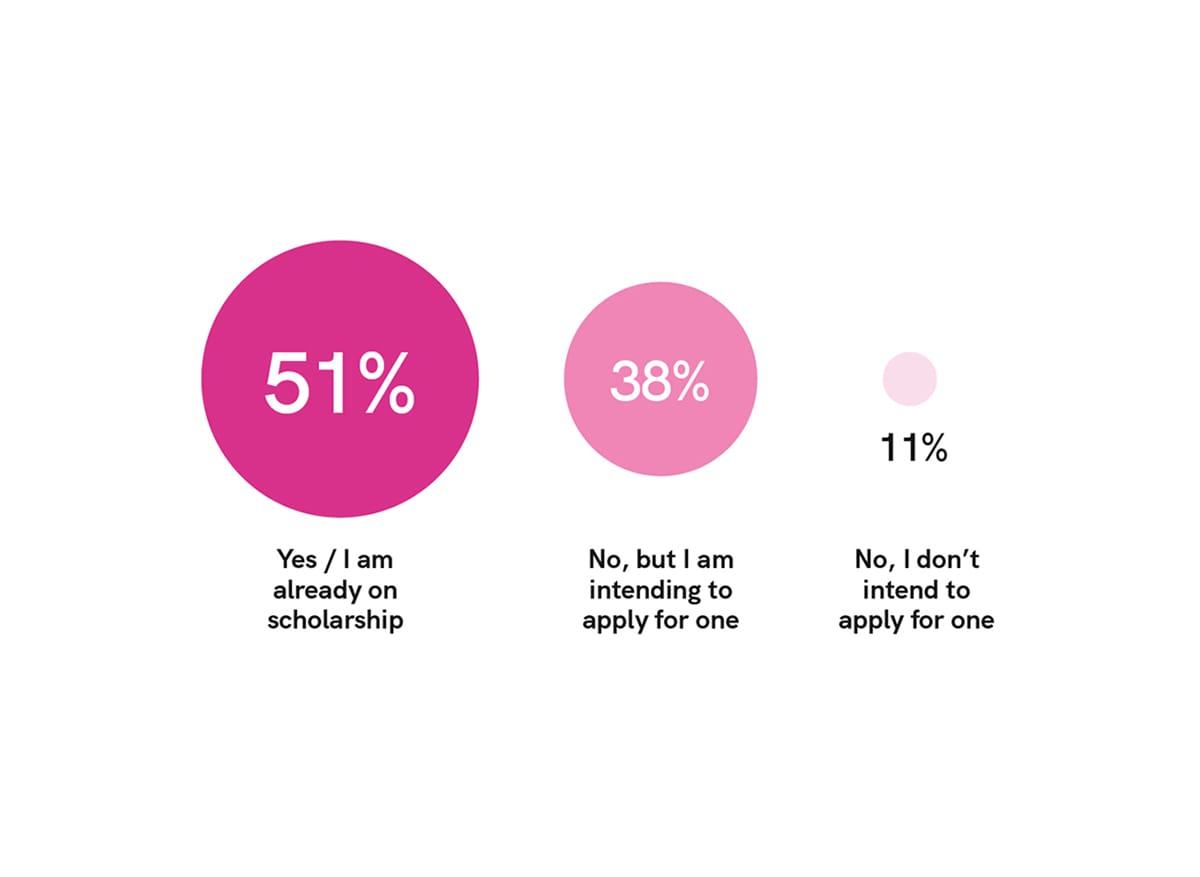
Over half of top JC/IB students are already on a scholarship, consistent with last year’s figures.
Preferred Country/Region for Tertiary Study Abroad
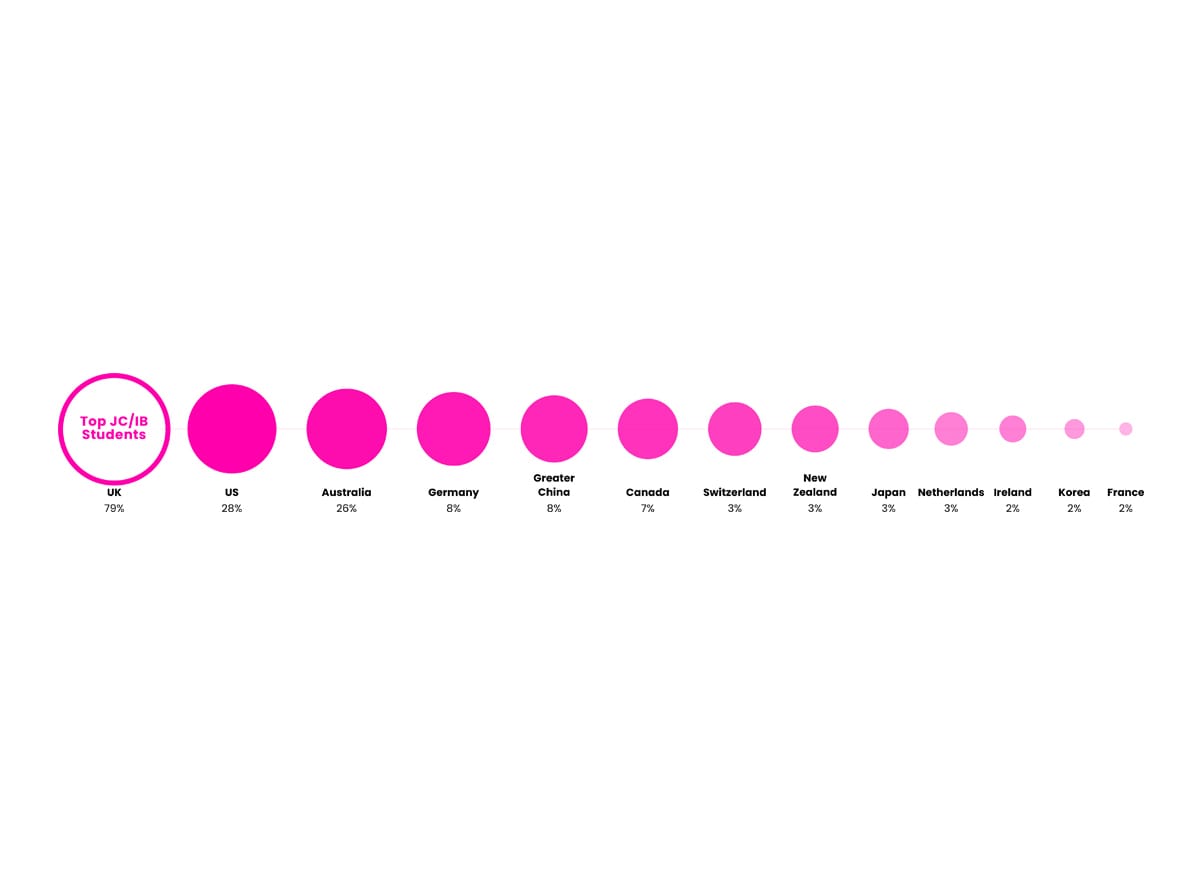
The UK remains the most preferred destination for tertiary studies abroad, maintaining its popularity across 2024 and 2025. In contrast, interest in the US has dropped sharply, likely due to recent changes and uncertainties in US student visa policies.
Australia continues to gain traction, while emerging destinations such as Greater China are seeing steady growth, rising from 3% to 5%. Newly added to the list this year, the Netherlands is also gaining favour among students, securing a spot in the Top 10 preferred overseas study destinations.
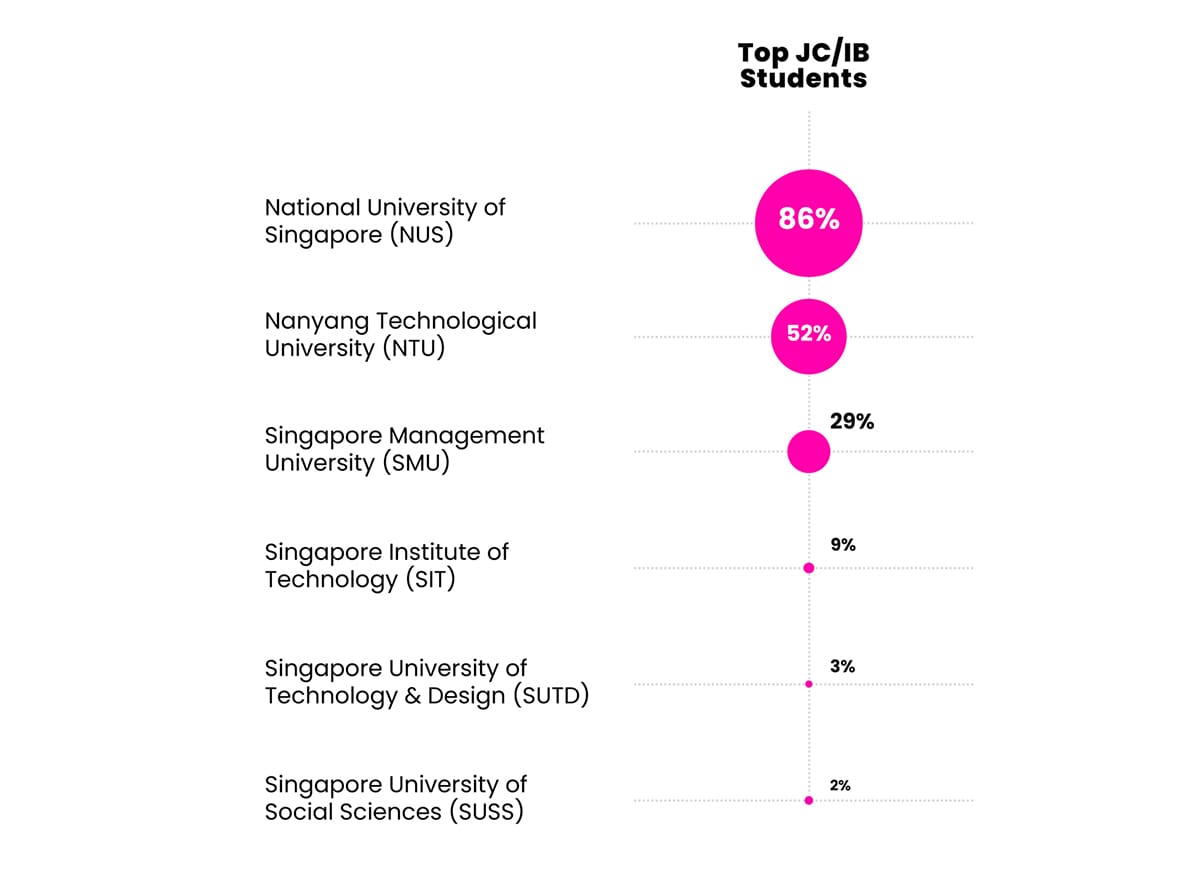
Preferred Local Tertiary Institution
NUS remains the most popular tertiary institution among top JC/ IB students. Notably, the Singapore Institute of Technology has gained traction, rising from 3% last year to 9% in 2025.
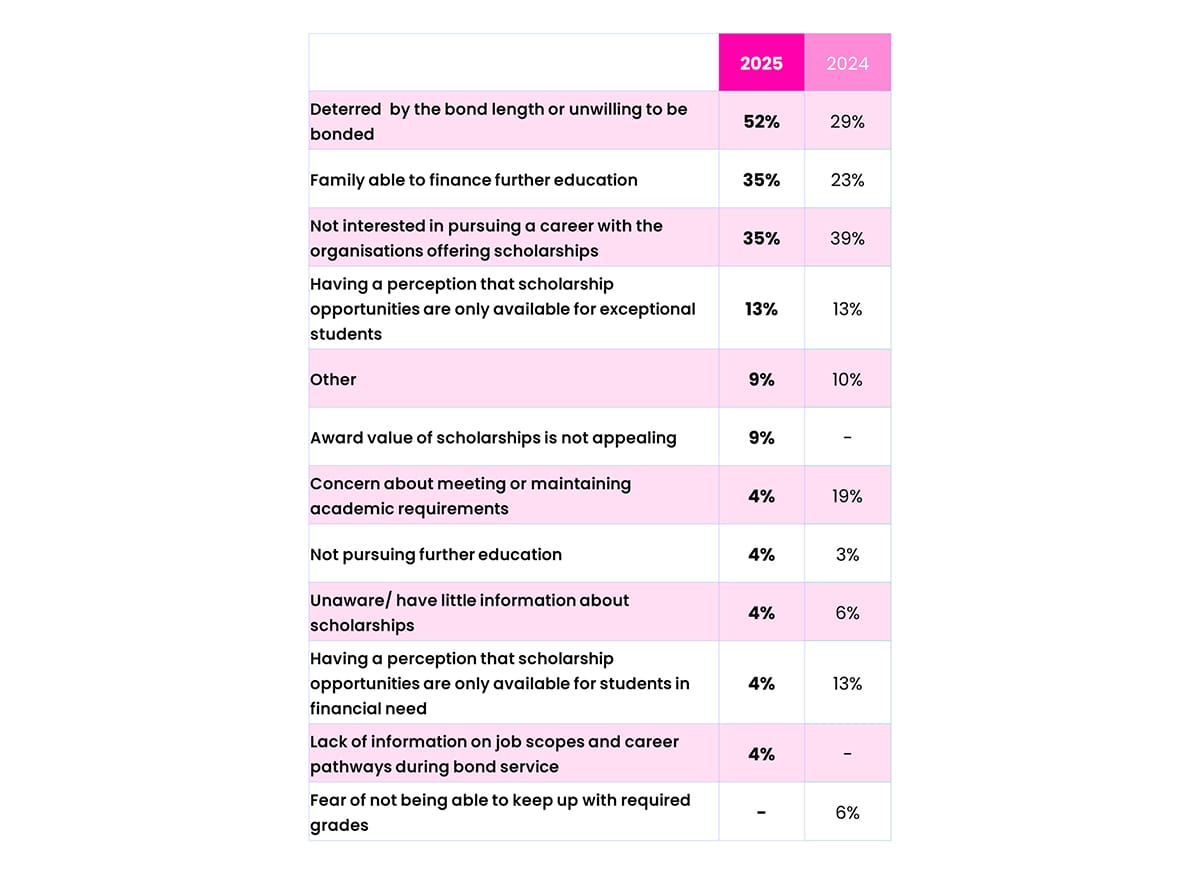
Reasons for Not Applying for Scholarships
Among top JC/IB students, concerns over bond length have surged in 2025, becoming the main reason for not applying for scholarships. Fewer now cite academic requirement worries, as concerns shift towards long-term commitments.
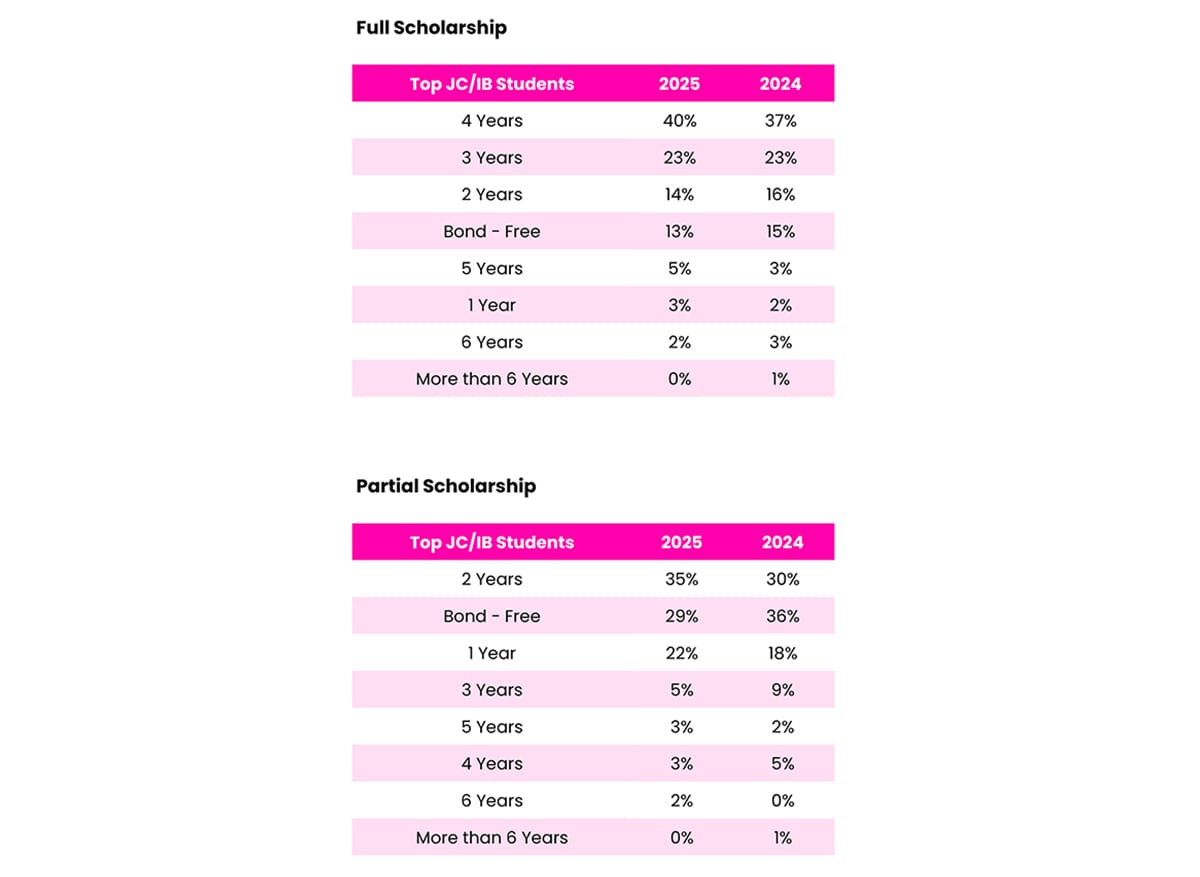
Acceptable Bond Duration
For local full scholarships, most top JC/IB students continue to prefer a bond duration of around three to four years, with four years remaining the most acceptable.
For partial scholarships, the trend leans towards shorter or bond-free commitments, with one to two years being the most acceptable duration. This indicates that students are increasingly valuing flexibility in their overall commitment.
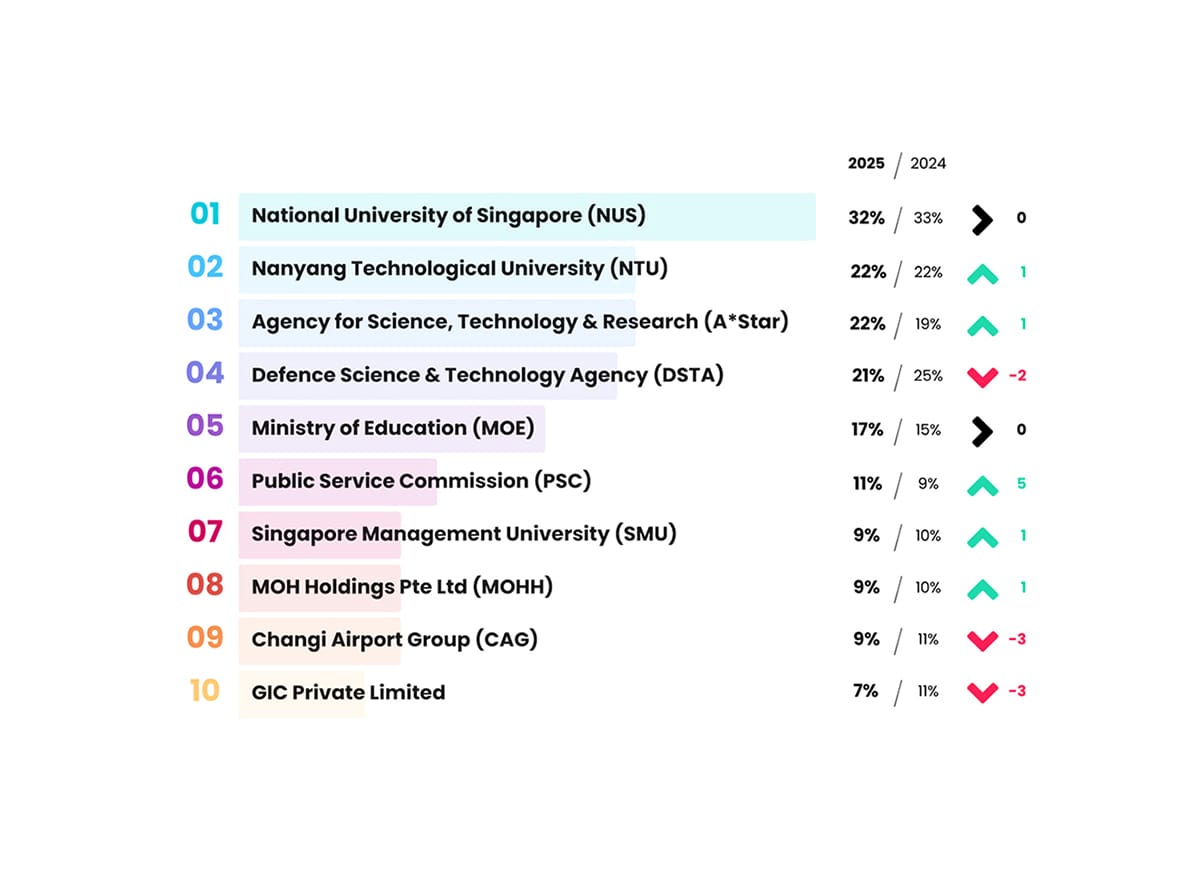
Scholarship Provider Rankings
In 2025, NUS remains the top preferred scholarship provider. NTU and the Agency for Science, Technology and Research have both seen small gains, showing continued interest in science- and technology-related scholarships.
The Public Service Commission rose notably, reflecting renewed confidence in public sector pathways. MOH Holdings has also moved up to 8th place, aligning with the growing interest in health science related courses.
Factors Important to a Scholarship Application
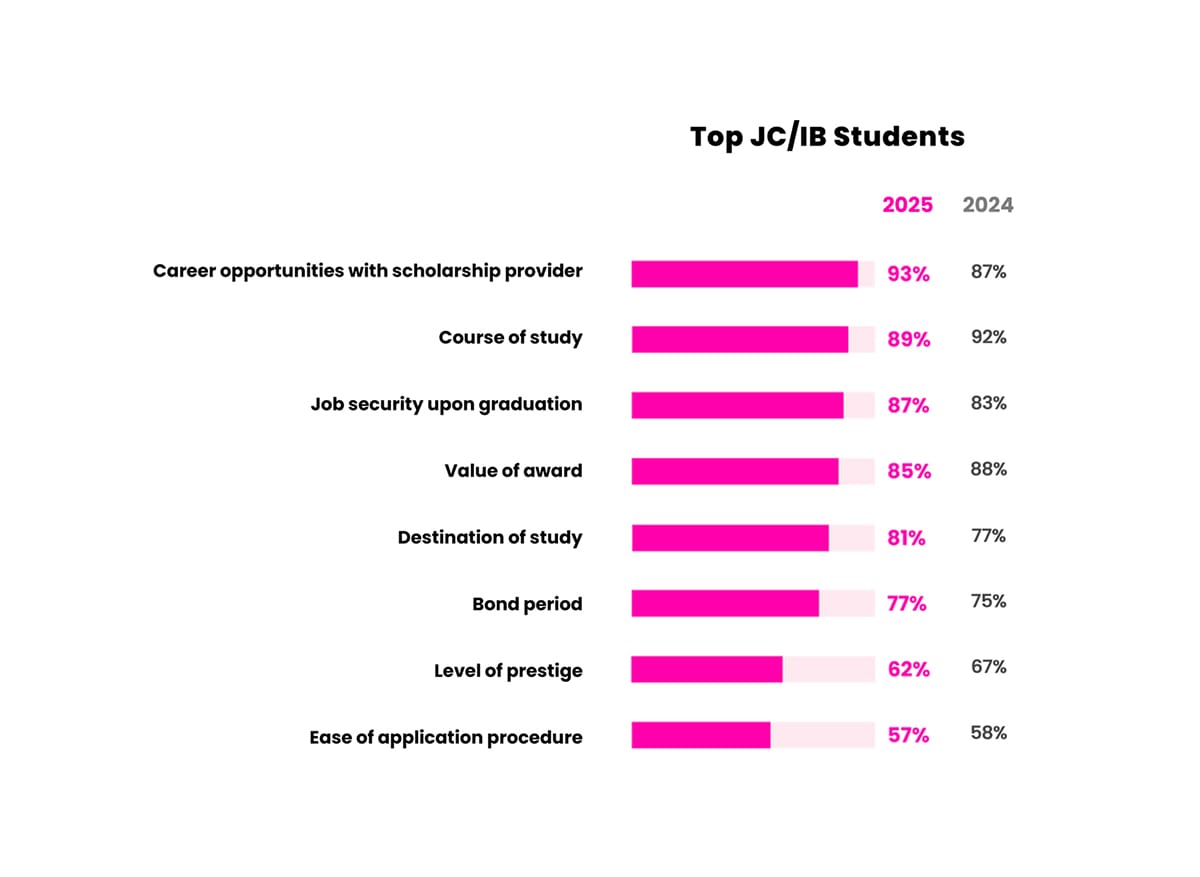
Career opportunities with the scholarship provider remains the top deciding factor for scholarship applications, strengthening further in 2025. For top JC/IB students, this has overtaken course of study, which dipped slightly from 2024. Job security upon graduation also gained importance, showing students’ growing focus on career prospects and job assurance.
Preferred Sector to Work In (Top 10)
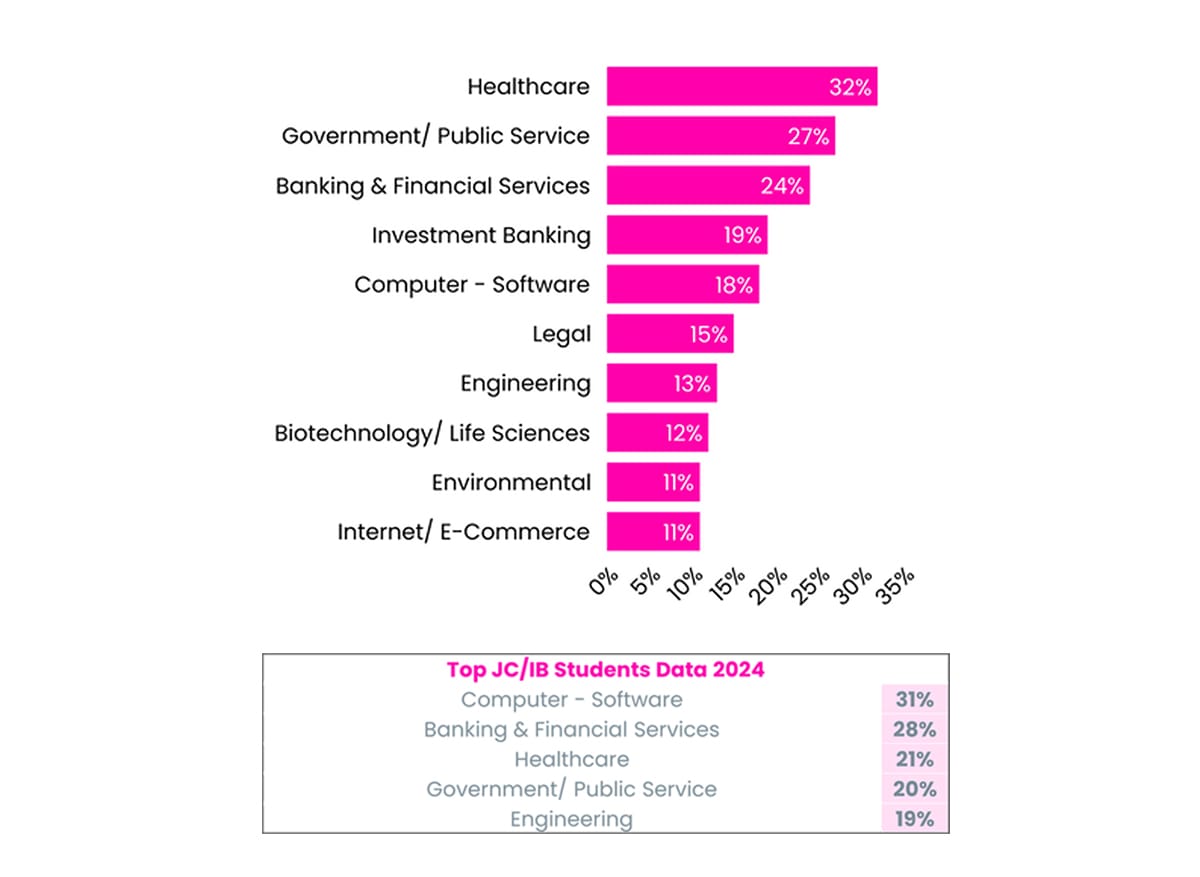
Interest in Healthcare and Public Service rose noticeably in 2025, overtaking previous top choices such as Computer Software and Banking and Financial Services. This marks a shift toward more socially impactful and stable sectors, possibly influenced by growing attention to public health and government careers.
Attributes of an Ideal Job
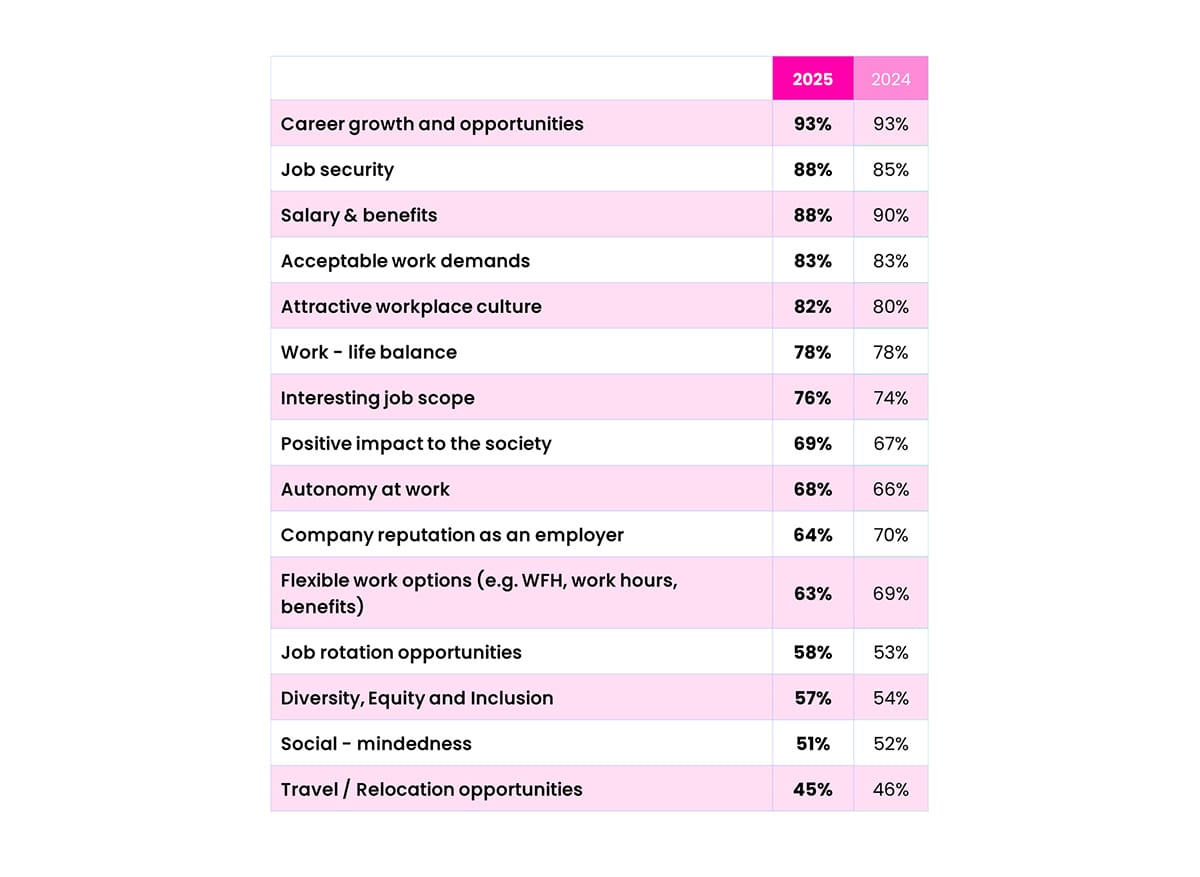
Career growth and job security remain the most important factors top JC/IB students look for in an ideal job. Salary, work-life balance, and workplace culture continue to matter, but there was a stronger emphasis on job security in 2025.
This shift is consistent with an SUSS study released in October 2025, which found that young Singaporeans are placing more importance on stability and financial security over flexible work arrangements, given the current economic conditions.