Mohamad Haziq Bin Mohamad Shukur is a recipient of the SGRail Industry Scholarship and is pursuing a Bachelor of Engineering in Sustainable Infrastructure Engineering (Land) at the Singapore Institute of Technology. He is interning at SBS Transit’s North East Line Signalling Department.
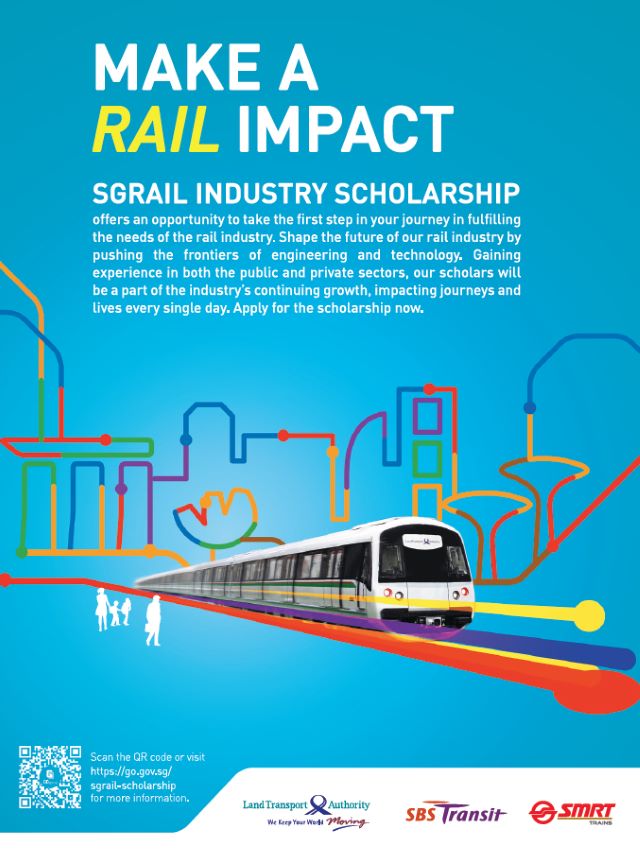
The SGRail Industry Scholarship, offered by the Land Transport Authority (LTA), aims to nurture the next generation of rail engineering professionals. This unique scholarship offers recipients the opportunity to gain hands-on experience in both the public and private sectors, equipping them with a comprehensive understanding of the public transport industry.
Mohamad Haziq Bin Mohamad Shukur and Kwa Ren Ren, Reiko, two exceptional SGRail Scholars, have embarked on a remarkable journey and they look forward to complementing their academic pursuits with practical experience in the rail industry.
From Worldskills to Rail Tracks
Haziq’s interest in the rail industry was ignited during his participation in the Worldskills Singapore Competition 2018, where he represented Singapore Polytechnic in the Rapid Transit Systems category. “All along, I’ve been interested to pursue a career in engineering. Participating in the competition was my first encounter with the rail industry. There, I was taught and trained by engineers from LTA, SBS Transit and SMRT, spanning across the rolling stock, signalling and power divisions. Listening to their experiences strengthened my belief that the rail industry aligns with my future goals,” he recalled.
During his National Service, Haziq’s role in the Army’s Transport Formation solidified his passion for engineering and provided him with valuable insights into the intricacies of vehicle and infrastructure maintenance. He also attended bus and rail depot open houses where he was exposed to various operational aspects, further inspiring him to specialise in the public transport sector. Pursuing a degree in Sustainable Infrastructure Engineering (Land) at the Singapore Institute of Technology seemed like the perfect fit.
The SGRail Industry Scholarship caught Haziq’s attention due to its comprehensive exposure to both the regulatory and operational facets of the rail industry. “This in-depth understanding will enable me to communicate effectively with a diverse set of stakeholders and contribute to the innovation and adaptation of future systems,” he explained.
Throughout his academic journey, Haziq benefited greatly from his professors, who not only integrated their research into the curriculum but also applied textbook engineering problems to real-life situations. For example, during a lesson on corrosion, his professor discussed his research findings on the Stress Corrosion Cracking of steel wires and bolts, including the implications, scientific methodologies, and the engineering solution devised to address the issue. Such teaching not only enhanced Haziq’s understanding but also demonstrated the tangible impact of engineering principles in solving actual challenges.
Currently interning with SBS Transit under the North East Line Signalling Department, Haziq is gaining hands-on experience in mechanical design and contributing to projects aimed at enhancing work safety and productivity.
For Haziq, his internship serves as a vital bridge between theoretical knowledge and practical applications. Through shadowing his colleagues, he has gained diverse practical experiences in track maintenance and learnt the nuances of maintenance tasks. Additionally, his involvement in reviewing signalling systems has enabled him to identify and address potential faults, further bolstering his technical proficiency. Such exposure has not only honed his problem-solving skills and deepened his understanding of real-world scenarios, but also equipped him with the adaptability and confidence needed to navigate professional challenges in the future.
Looking ahead, Haziq harbours ambitions of attaining chartership and becoming a domain technical expert in urban metro systems or even high-speed rail. He emphasises the importance of self-reflection as he becomes more immersed in his work. “I frequently assess my skills and competencies with the aim of improving myself,” he shared.
For prospective SGRail scholars, he offered this encouraging advice: “Don’t hesitate. Take the leap and give it a go. Who knows? Your dream might just become reality.”
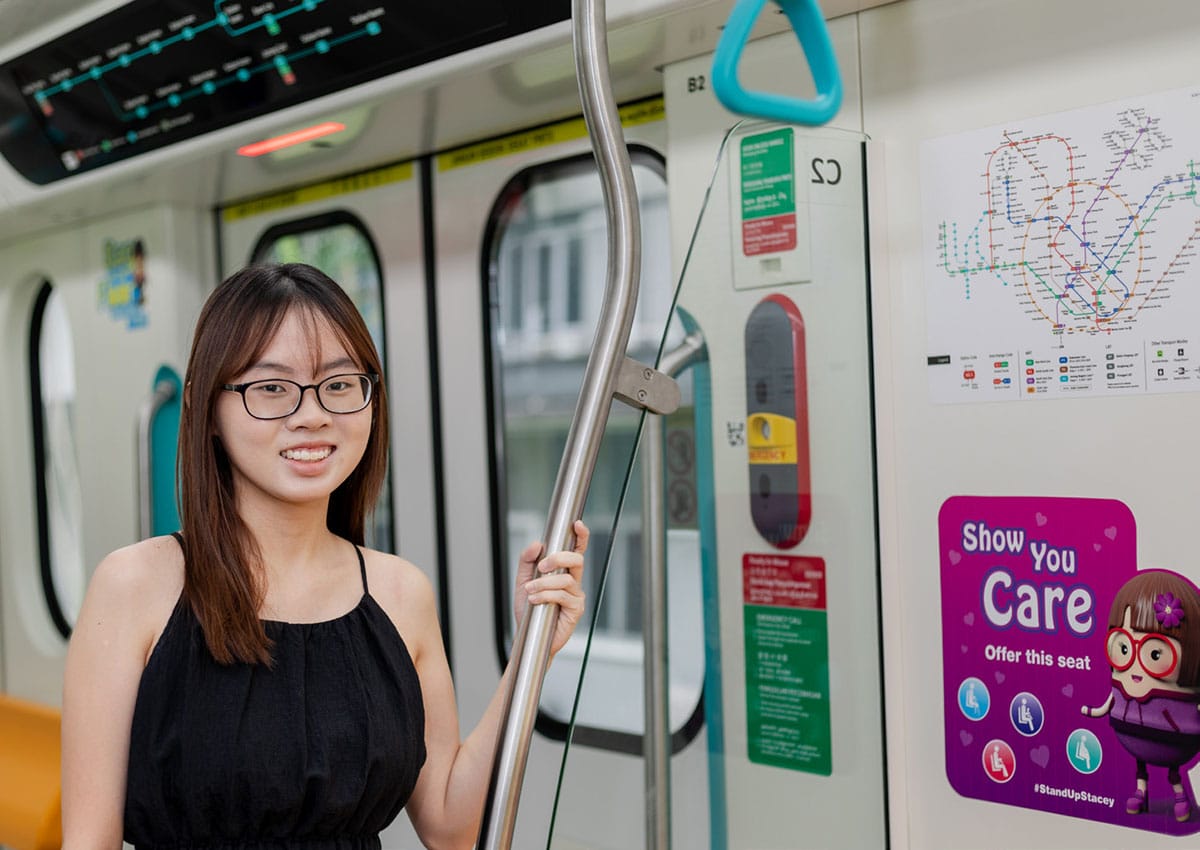
Kwa Ren Ren, Reiko has graduated with a Bachelor of Engineering in Mechanical Engineering from Nanyang Technological University and has started work in SMRT Trains since July.
Crafting Innovative Solutions on the Rails
For Reiko, her interest in Mechanical Engineering stemmed from an early inclination towards problem-solving, which eventually led her to the SGRail Industry Scholarship. “Since childhood, I have always been intrigued by the mechanics behind everyday objects and have enjoyed solving puzzles, and this natural curiosity and problem-solving mindset have driven me towards Mechanical Engineering, where I can apply these skills to real-world problems and innovations,” she shared.
Beyond the nature of the industry, the scholarship appealed to Reiko due to its comprehensive coverage of both the public and private sectors of the rail industry. “This exposure provided me with a well-rounded knowledge of the industry, which supports my aspiration of contributing to the planning, design, and maintenance of rail infrastructure,” she explained.
Reiko studied at Nanyang Technological University, where she acquired strong foundations in engineering principles and concepts, enabling her to tackle complex problems with confidence. “The Design modules have been instrumental in teaching me how to read professional documents such as product catalogues and standards,” she noted.
Building on these skills, she had the opportunity to intern at SMRT, where she played a key role in crafting tender specification documents for the procurement of new technologies. “To overcome these challenges, my manager provided guidance and showed me sample tender documents to reference,” she explained.
One of Reiko’s notable contributions was creating data visualisations for dynamic gauge monitoring in the rail network. “By creating these data visualisations, I was able to streamline the reporting process by presenting complex data in a clear and concise manner,” she said. These visualisations not only helped the workforce operate more efficiently but also enabled them to better identify areas needing more attention. By highlighting trends and anomalies, the visualisations allowed her colleagues to quickly pinpoint potential issues, prioritise maintenance tasks, and allocate resources more effectively. Additionally, clear data representation facilitated better decision-making, as team members could easily interpret the information and make informed choices about the rail network’s operations and improvements.
Reiko’s internship also included memorable on-site visits, such as observing how rail measurements are taken using the laser track trolley. “To ensure accuracy, the rail measurements have to be collected in a precise alignment and calibration. Any inconsistencies between runs would lead to inaccurate data analysis. Having seen how the data was collected, I was then able to provide feedback to the team to ensure that the data collected was of high quality and reliable. This reinforced the importance of ensuring data accuracy and reliability in maintaining the integrity of rail operations,” she explained.
Looking to the future, Reiko aspires to become a highly skilled and knowledgeable rail engineer, specialising in the design and maintenance of rail systems. “As I continue to enhance my skills and gaining experiences in the rail industry, I also hope to mentor and inspire the next generation of rail engineers, helping to shape the future of the industry,” she added.
She advised prospective SGRail scholars: “Keep an open mind and be willing to learn and adapt to new challenges, as the rail industry is constantly evolving and emerging with new technologies.”
As Haziq and Reiko continue their journeys, their stories serve as an inspiration for aspiring scholars seeking to make a lasting impact on Singapore’s rail industry. With their passion, dedication, and the instrumental support of the SGRail Industry Scholarship, they are paving the way for a future where sustainable transportation thrives.